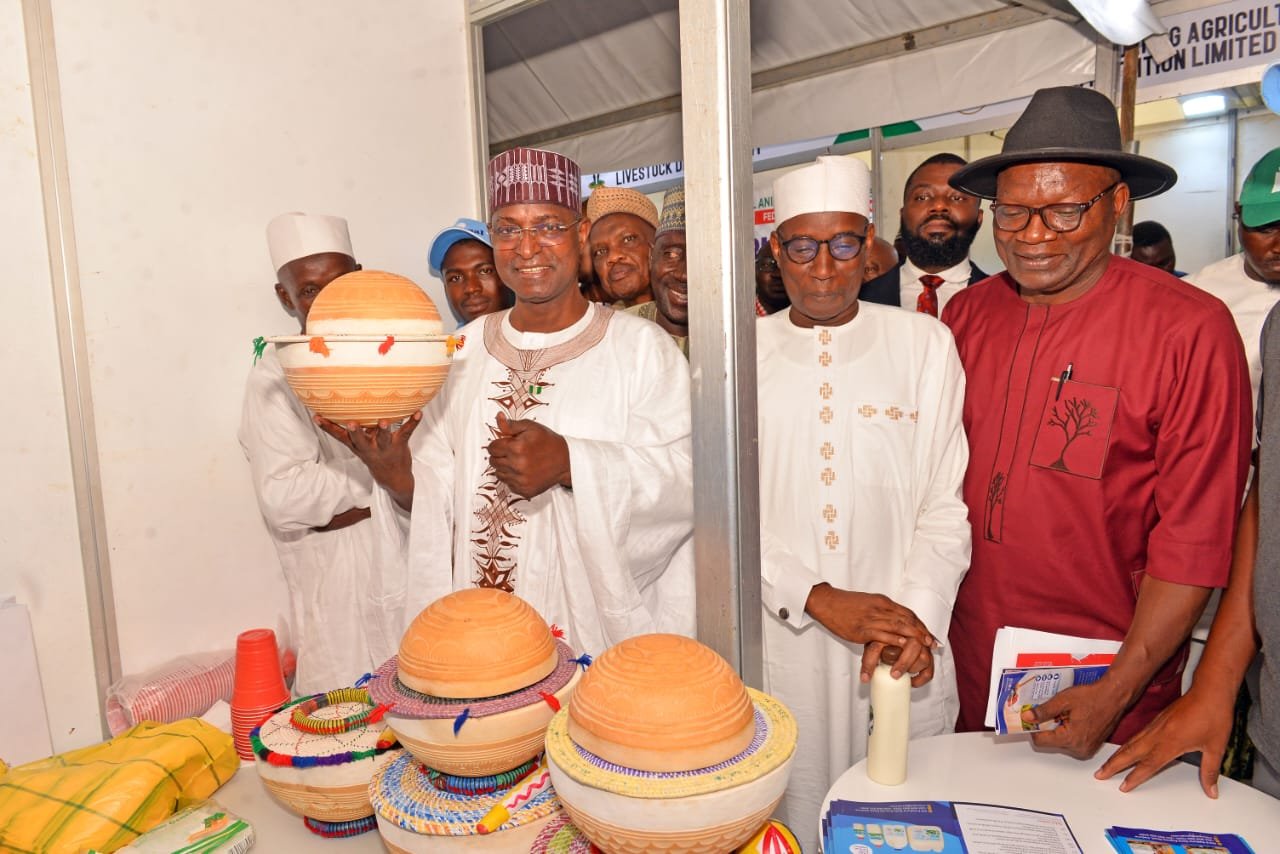

Nigeria’s dairy sector is undergoing a major transformation as the Federal Government intensifies efforts to boost local milk production, attract investments, and expand opportunities for women and youth across the livestock value chain.
Speaking at the 2026 World Milk Day Conference held in Abuja, the Minister of Livestock Development, Idi Mukhtar Maiha, said women remain at the heart of Nigeria’s dairy industry, playing critical roles in milk production, preservation, processing, storage, and marketing.
Maiha noted that Nigeria’s annual milk demand stands at about 1.7 million metric tonnes, while local production is estimated between 600,000 and 700,000 metric tonnes, creating a significant supply gap that fuels dairy imports and foreign exchange expenditure.
He said the Federal Ministry of Livestock Development is implementing strategic interventions under the Renewed Hope Agenda of President Bola Tinubu to strengthen local dairy production, improve milk aggregation systems, expand cold-chain infrastructure, and promote private sector participation across the value chain.
According to the minister, a key milestone was the validation of the National Dairy Policy Implementation Framework, which is expected to provide a roadmap for achieving measurable outcomes in the dairy sector.
Maiha highlighted several achievements recorded by the ministry since its establishment in 2024, including the construction of modern veterinary hospitals, expansion of livestock vaccination programmes, establishment of dairy training centres, development of grazing reserves, and increased collaboration with dairy processors and investors.
He said the dairy industry has continued to attract significant investments from local and international firms, citing plans by Pure Dairy Herds to establish large-scale dairy farms and a $496 million dairy production and processing project backed by the Nigeria Sovereign Investment Authority and a United Kingdom-based investor.
The minister also disclosed plans for a Women and Youth in Livestock Empowerment Initiative aimed at expanding economic opportunities for about 37,000 women and young people through skills development, enterprise support, access to finance, technology transfer, and market integration.
He added that the ministry is exploring the establishment of women-led milk aggregation and processing cooperatives to strengthen local value addition and improve market access for dairy producers.
Maiha reaffirmed that Nigeria’s dairy sector remains open to investors, stressing that increased local milk production offers substantial employment opportunities across production, processing, transportation, veterinary services, and marketing.
He said the government’s objective is to build a productive, commercially viable and inclusive dairy industry capable of improving livelihoods, reducing import dependence and contributing to national food security.