
The Federal Government has intensified efforts to unlock the economic potential of Nigeria’s livestock sector, unveiling plans to boost dairy production, attract investment, and create employment opportunities through the implementation of the National Ranching Policy.
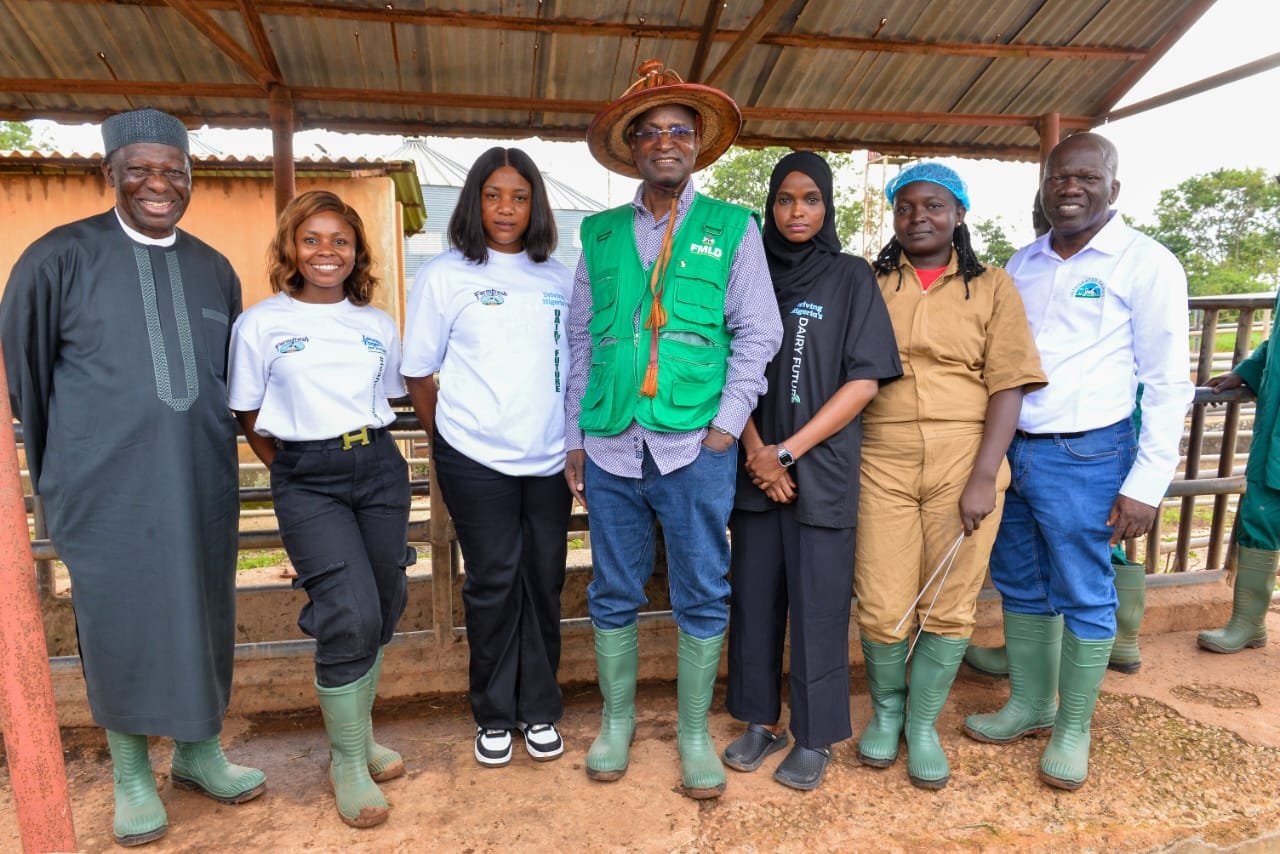
Minister of Livestock Development, Idi Maiha, disclosed this during a tour of major livestock and dairy enterprises in Plateau State, where he assessed facilities and ongoing agricultural activities aimed at strengthening the country’s dairy value chain.
The minister visited Integrated Dairies Limited in Vom, Bach Farms in Bassa Local Government Area, and Lush Farms along Bauchi Road, describing the facilities as strategic assets capable of driving growth in livestock production and agribusiness.
Maiha said the government is pursuing policies that will transform livestock farming into a major contributor to national economic development. According to him, Nigeria has abundant resources that can support a thriving dairy industry capable of generating wealth and improving livelihoods.
He explained that collaboration between the Federal Government and state administrations remains central to the livestock development agenda. He noted that 18 states have already established dedicated ministries to oversee livestock activities, while discussions are ongoing with other states to adopt similar structures.
The minister revealed that several projects are underway in Wase Local Government Area of Plateau State to improve livestock productivity. These include the construction of five boreholes, establishment of milk collection centres, development of grazing facilities, and creation of training centres for young people seeking opportunities in the sector.
According to him, the interventions are expected to strengthen livestock production systems while supporting economic growth in rural communities.
Speaking on Bach Farms, which occupies about 4,000 hectares, Maiha said the facility presents enormous opportunities for agricultural expansion. He disclosed that plans are being developed for a Youth Livestock and Agro Training Programme that could accommodate up to 1,000 participants at intervals.
The programme, he said, will equip young Nigerians with practical skills in livestock management, animal production, agribusiness development, and related agricultural enterprises.
He also identified greenhouse cultivation, pig farming, feed production, and fodder development as areas with strong investment prospects capable of attracting private sector participation.
Maiha stressed the need to maximize the country’s agricultural resources, urging investors to explore opportunities across the livestock value chain, including dairy processing and value addition.
At Integrated Dairies Limited, the minister reaffirmed the government’s commitment to supporting pastoral communities through improved dairy processing systems and technical assistance programmes designed to increase milk output nationwide.
In her remarks, the Dean of the Faculty of Veterinary Medicine at the University of Jos, Professor Lami Lombin, praised Integrated Dairies Limited for maintaining its operations in the dairy industry for more than two decades. She called for stronger collaboration between government institutions and private operators to accelerate growth in the sector.
Founder and Chairman of Integrated Dairies Limited, Air Vice Marshal Ishaya Shekarri (Rtd.), said the company’s establishment was inspired by Plateau State’s favourable weather conditions. He recalled that the dairy enterprise commenced operations in 2002 after the acquisition of a farm previously owned by a multinational company.
Shekarri stated that the facility has evolved into what is widely regarded as Nigeria’s first successful vertically integrated dairy farm, producing yoghurt and other dairy products for the local market.
He commended the establishment of the Federal Ministry of Livestock Development and expressed confidence in the government’s livestock transformation agenda. He also pledged the company’s continued support and collaboration with relevant stakeholders to advance the sector.