
The Federal Government, in collaboration with the International Fund for Agricultural Development (IFAD) and other development partners, is promoting the wider adoption of artificial intelligence and digital technologies to transform agricultural extension services and improve the livelihoods of farmers across Nigeria.
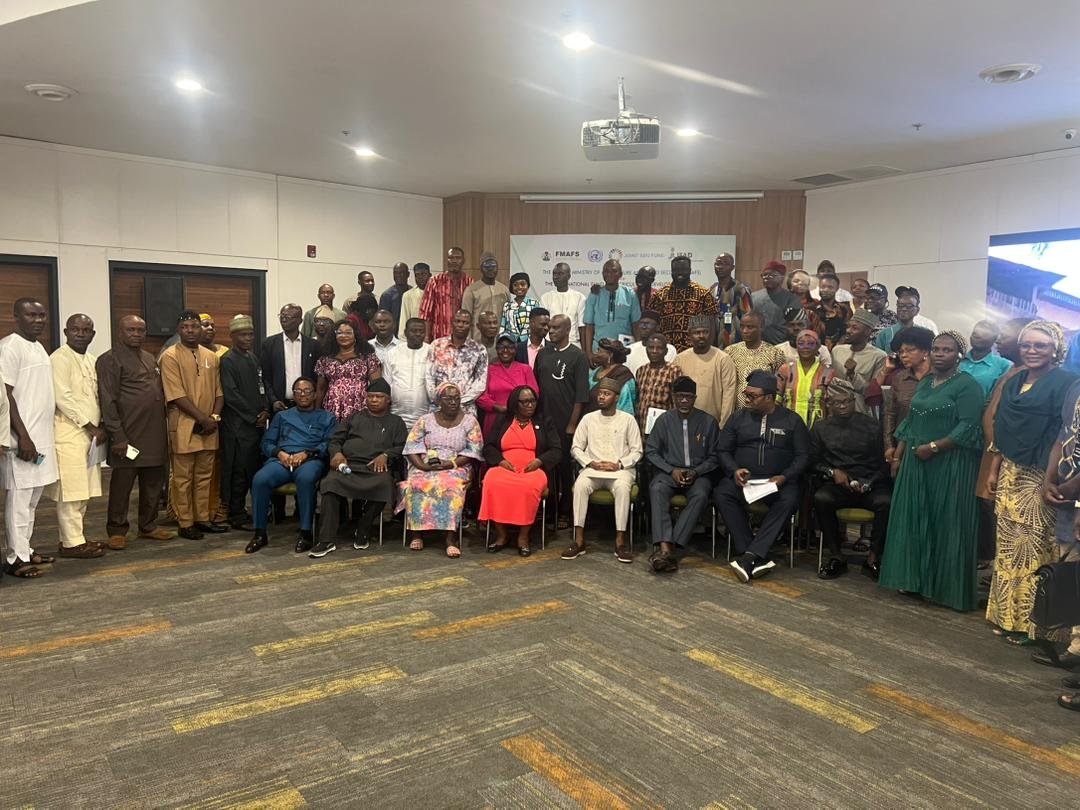
Stakeholders made the call at a workshop on Leveraging Artificial Intelligence in Digital Extension Across Agricultural Value Chains in Nigeria, held in Abuja under the UN Joint Programme on Accelerating Food System Transformation and Innovation in Nigeria.
The initiative is aimed at addressing growing pressure on Nigeria’s conventional extension system, which stakeholders say is increasingly unable to meet the needs of the country’s large and diverse farming population.
Speaking at the workshop, IFAD Country Director in Nigeria, Dede Ekoue, said the meeting represented an important step towards advancing digitalisation in agriculture through innovation, particularly the application of artificial intelligence.
Ekoue said IFAD was working with the Federal Department of Agricultural Extension Services and other partners under the UN Joint Programme to promote technology-driven extension services. She also highlighted collaboration with programmes including the Special Agro-Industrial Processing Zones (SAPZ), the Livelihood Improvement Family Enterprises for Niger Delta (LIFE-ND), the National Productivity Centre and the Value Chain Development Programme (VCDP).
She urged stakeholders to move beyond discussions and ensure that recommendations from the workshop translated into practical interventions capable of delivering measurable benefits to farmers.
The Director of the Federal Department of Agricultural Extension Services, Dr Christiana Joseph Malgwi, said agricultural extension remained central to the development of the sector but must evolve in response to the scale and changing needs of Nigerian farmers.
Malgwi said digital technologies and AI should complement rather than replace face-to-face extension services, noting that the technologies could assist farmers and extension professionals with early pest and disease detection, weather-based advisory, soil and crop management, livestock production, post-harvest handling, market information and access to financial services.
She, however, cautioned that the expansion of AI in agriculture must be accompanied by measures to address digital inclusion, data privacy, cybersecurity, affordability, accuracy and accessibility, particularly for smallholder farmers, women, young people and communities with limited access to technology.
According to her, AI solutions designed for Nigerian agriculture must reflect the country’s different agro-ecological zones, local languages, farming systems and indigenous knowledge. She called for stronger partnerships among federal and state governments, research institutions, universities, development partners, technology companies and farmers.
Malgwi said the success of digital agriculture should ultimately be measured by its impact on farmers’ productivity, income and resilience rather than simply by the number of digital platforms created.
The urgency of the digital transition was further underscored by Digital Green Country Director, David Edimu, who said the shortage of extension personnel had made the traditional model of physically reaching farmers increasingly difficult.
Edimu said that in some states, one extension officer was responsible for between 8,000 and 10,000 farmers, making it practically impossible for conventional extension systems to provide adequate support to every farmer.
He said Digital Green had developed platforms that enable farmers to submit questions through text or voice and receive responses in local languages, helping to improve accessibility, particularly for women and farmers with limited literacy.
He disclosed that more than 220 extension managers had already been engaged in the initiative and called for the creation of a centralised and standardised repository of agricultural information from which farmers and extension providers could access reliable and consistent advisory content.
IFAD consultant, Yakubu Donald, said the traditional system of extension officers moving from one farm to another was becoming increasingly difficult to sustain, making digital delivery essential for reaching farmers at scale.
He said AI could provide more precise advisory services by tailoring information to a farmer’s crop, production stage, location and specific needs, covering the entire agricultural cycle from land preparation and planting to harvesting, drying, storage, processing and market access.
Donald also highlighted the potential of AI and Internet of Things technologies in post-harvest management, particularly in monitoring moisture levels and storage conditions to reduce losses and the risk of aflatoxin contamination.
He urged stakeholders to build on existing public digital systems rather than creating fragmented platforms, while retaining simpler technologies such as SMS and USSD for farmers without smartphones or reliable internet access.
Evidence from ongoing programmes also demonstrated the potential of digital extension. The National Project Coordinator of SAPZ, Dr Kabir Yusuf, said the programme’s AI-powered Farmers Chat platform, developed in partnership with Digital Green, had reached 20,899 farmers in Kano and Ogun states, representing about 87 per cent of its initial target of 24,000 farmers.
He said 14,895 farmers had been reached in Kano and 6,004 in Ogun, with women accounting for approximately 37 per cent of beneficiaries. A total of 233 extension agents and programme personnel had also been trained, exceeding the initial target of 220.
According to Yusuf, farmers can use the platform to photograph pest damage or send voice notes in Hausa or English and receive near-instant advisory support. He said the approach was helping to reduce pressure on extension agents and allowing them to concentrate on field demonstrations and more complex agricultural challenges.
Yusuf, however, stressed that technology could not replace human interaction, estimating that AI accounted for about 30 per cent of the intervention’s impact, while human facilitation contributed the remaining 70 per cent.
He said advisory content must be validated by the Federal Department of Agricultural Extension Services and relevant research institutions before being delivered to farmers to ensure that recommendations are appropriate for local conditions.
Poor connectivity and limited access to Android smartphones among smallholder farmers, he added, remained major barriers to expanding the reach of digital extension services.
The National Project Coordinator of VCDP, Dr Fatima Aliyu, said digital extension was making it easier for farmers to access timely and location-specific information to improve their production, processing and marketing activities.
She said the programme was using digital platforms and social media to expand its outreach and facilitate knowledge sharing among beneficiaries, including women, youths and persons with disabilities.
Aliyu added that digital financial services were also supporting some beneficiaries, particularly young people and persons with disabilities, by creating opportunities for income generation.
She identified poor network connectivity, high data costs and inadequate funding as some of the challenges limiting access to digital extension services, stressing the need for continued investment in digital skills training for farmers.
On his part, the National Project Coordinator of LIFE-ND, Dr Sanni Fatai, said the programme remained committed to improving the livelihoods of women and young people in the Niger Delta through productive economic activities.
Fatai said the programme had established structures to support beneficiaries and was relying on technical assistance from partners, including IFAD and the Federal Government, to achieve its objectives.
Also speaking, UNICEF Nutrition Expert, Mr Smith, said the transformation of Nigeria’s food system must go beyond increasing agricultural production to ensuring that Nigerians have access to nutritious and diverse diets.
Smith said AI had significant potential to transform food systems by improving agricultural production, strengthening information delivery and enhancing the livelihoods of smallholder farmers.
He said the UN Joint Programme was focused on areas including food system coordination and governance, improving smallholder farmers’ production and incomes through digital technologies, reducing post-harvest losses and promoting healthier diets.
Smith disclosed that UNICEF was working with government institutions to update Nigeria’s dietary guidelines using a food-system approach that considers the entire chain from production and distribution to utilisation and consumption.
He also stressed the need for locally relevant data to support the development of AI systems suitable for Nigerian communities, noting that many large language models had been developed primarily using data from developed countries.
Beneficiaries who have used the digital tools also shared positive experiences.
A fish farmer, Mrs Ekem Abel, said AI-enabled advisory services helped her identify poor water quality as the likely cause of repeated fish deaths. She, however, called for an offline version of the Farmers Chat platform to address connectivity challenges in rural areas.
A rice farmer, Fidelis, said digital tools had improved access to buyers and helped farmers connect to markets, while GPS-enabled features had made it easier to measure farmland accurately and reduce disputes associated with land transactions.
The stakeholders and beneficiaries ultimately called for wider access to digital devices, affordable internet services and training, particularly for smallholder farmers in rural communities.
They maintained that while AI could significantly expand the reach and effectiveness of agricultural extension, its success in Nigeria would depend on combining technology with human expertise, reliable infrastructure, locally relevant data and sustained investment in the farmers who need the services most.