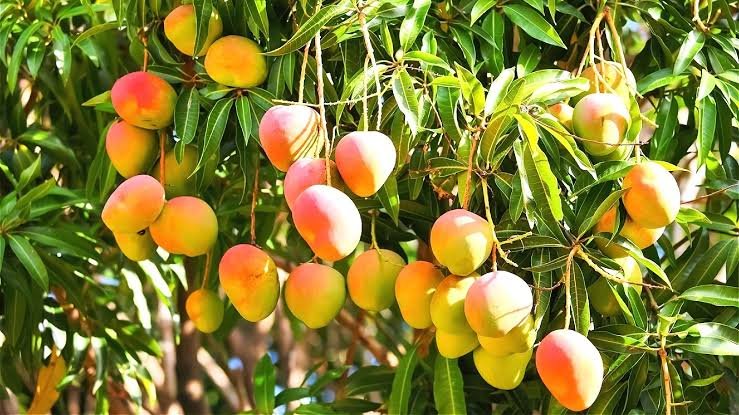

The National Association of Mango Producers, Processors and Marketers of Nigeria (NAMPPMAN) says Nigeria has the potential to rise into the world’s top three mango-producing countries if the government implements targeted reforms, supports farmers and promotes modern production methods.
NAMPPMAN President, Garba Kangiwa, disclosed this in an interview on Monday in Abuja.
According to him, Nigeria currently ranks 11th globally in mango production, with an estimated annual output of one million metric tonnes.
He noted that despite the country’s substantial production, Nigeria remained significantly behind leading producers, including India, which records about 26 million metric tonnes annually, as well as China, Indonesia, Mexico and Egypt.
The NAMPPMAN president said unlocking the sector’s potential would require stronger government intervention at both federal and state levels.
”The first thing we are looking for is cooperation from government at all levels.
“We need the government to understand that mango is a natural gold mine.
”Every part of the mango is useful, and boosting this sector will directly increase food security, nutrition, and employ millions of youth and women across the value chain,” he said.
Kangiwa identified access to land, financing and improved planting materials among the key areas requiring urgent government attention.
He disclosed that the association had set an initial goal of planting at least 50 million high-quality mango trees meeting international standards across Nigeria within the next few years, with varieties such as Kent among those being targeted.
According to him, modern tissue culture technology should replace conventional grafting techniques to accelerate the multiplication and establishment of improved mango varieties.
”The government should incorporate mango cultivation into its national tree-planting programmes, provide land, and coordinate with agricultural institutions to propagate fast-growing, high-yield varieties.
“These will transform the production capacity of Nigeria’s mango industry within four years,” he said.
He also called for government agencies to address administrative and bureaucratic barriers that limit smallholder farmers and processors from accessing agricultural loans and development financing.
Kangiwa said post-harvest losses remained a major challenge in the mango industry, estimating that farmers lose between 40 per cent and 50 per cent of their harvest because of inadequate storage facilities, transportation challenges and insufficient processing infrastructure.
He noted that Nigeria already has evidence of the commercial potential of the sector, pointing out that one local exporter generates more than N10 billion annually from mango exports. However, he said the absence of a centralised database for exporters and inadequate processing capacity continue to limit the sector’s wider economic contribution.
To increase domestic processing and reduce dependence on imported mango-based products, Kangiwa proposed the establishment of between 12 and 14 processing plants across the six geopolitical zones and the Federal Capital Territory.
”We have the market, but our processing capacity is low.
”If we can establish at least two processing factories per geopolitical zone, we will saturate the domestic market with natural Nigerian mango products and then expand aggressively into international markets,” he said.
He explained that opportunities for value addition extended beyond fresh mangoes and juice, noting that discarded mango materials could be processed into organic fertiliser, while mango seeds could be used in producing industrial oil and cosmetic products.
Kangiwa, an associate professor of haematology and blood transfusion who is also involved in agriculture, said he was committed to restructuring NAMPPMAN during his four-year tenure.
”My key priorities include digitising farmer registration, mapping orchard locations and capacities across all states, conducting a national needs assessment survey, and strengthening market linkages for producers, processors, and exporters,” he said.
He urged association members, private-sector investors and development partners to work with the new executive council to transform Nigeria’s mango industry into a stronger source of foreign exchange, employment and sustainable economic growth.