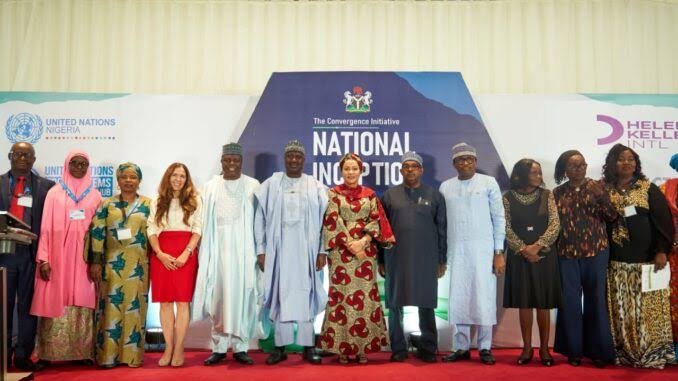

The United Nations has reiterated its commitment to supporting Nigeria’s efforts to build stronger food systems, enhance climate resilience and fast-track the achievement of the Sustainable Development Goals (SDGs).
The assurance was given by the United Nations Resident Coordinator in Nigeria, Mohamed Fall, during the ongoing two-day National Dialogue on Nigeria’s Convergence Initiative on Food Systems and Climate Action held in Abuja on Thursday.
The event convened representatives from government institutions, development organisations, academic institutions, civil society groups and the private sector to deliberate on strategies for integrating food systems transformation with climate action.
Discussions at the dialogue centred on aligning reforms in Nigeria’s food systems with climate initiatives to support the attainment of both the SDGs and the targets outlined under the Paris Climate Agreement.
Fall said the United Nations would sustain its support for Nigeria’s nationally driven initiatives through the UN Sustainable Development Cooperation Framework.
“The United Nations remains a committed partner to Nigeria. Through the UN Sustainable Development Cooperation Framework, we will continue supporting nationally led efforts that strengthen food systems, promote climate resilience, empower women and young people, mobilise sustainable financing and accelerate progress towards the SDGs,” he said.
The UN resident coordinator described food systems as the entire chain of activities involved in food production, processing, transportation and consumption.
According to him, effective food systems contribute to improved health outcomes, environmental protection, economic growth and the preservation of cultural heritage.
He recalled that the United Nations Secretary-General convened the Food Systems Summit five years ago to mobilise global efforts towards more sustainable food production and consumption patterns.
Fall noted that the current dialogue represented another significant milestone in Nigeria’s efforts to build resilient, inclusive and sustainable agrifood systems. He also commended the Federal Government for providing leadership and fostering collaboration among stakeholders towards a common vision for food systems transformation.
“Nigeria continues to demonstrate that when national leadership is matched by strong partnerships, transformation is possible,” he said.
Also speaking, the Deputy Director of the UN Food Systems Coordination Hub, Lara Rothe, disclosed that Nigeria had become the 22nd country to join the Convergence Initiative on Food Systems and Climate Action.
She observed that countries around the world were increasingly recognising the importance of integrating food systems reforms with climate action measures.
Rothe stated that Nigeria had demonstrated strong commitment to the process since the 2021 UN Food Systems Summit, noting that the country had organised more than 40 national and sub-national dialogues that contributed to the development of Nigeria’s Food Systems Transformation Pathway and the identification of 78 priority actions.
She reaffirmed the commitment of the UN Food Systems Coordination Hub to continue supporting Nigeria through collaboration with government institutions, the UN Country Team and other relevant stakeholders.
During a technical panel session, UNICEF’s Chief of Nutrition, Nemat Hajeebhoy, emphasised the importance of placing nutrition at the centre of food systems transformation efforts. She noted that improving food systems should involve not only increasing food availability but also ensuring access to nutritious diets.
“There is a need to improve food systems not just because people need to eat, but because the food they consume must provide adequate nutrition, especially for children to grow healthy,” she said.
Contributors to the panel discussion also included representatives of the Federal Ministry of Livestock Development, the Federal Ministry of Marine and Blue Economy, the Food and Agriculture Organisation, UNICEF and the Global Alliance for Improved Nutrition.