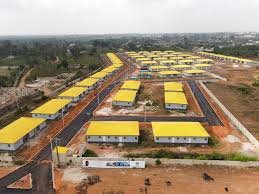

The Ogun State Government has intensified efforts to enhance local poultry production with the completion of a 5,000-birds-per-day poultry processing facility at the Ajegunle Farm Settlement in Odeda Local Government Area, a project expected to expand the state’s annual poultry processing capacity by about 1.3 million birds.
The Commissioner for Agriculture and Food Security, Mr Bolu Owotomo, disclosed this during an inspection tour of agricultural facilities in Odeda and Yewa South local government areas, as part of the first phase of a statewide assessment of ongoing and completed agricultural projects.
Owotomo said the facility, acquired under the World Bank-supported Ogun State Economic Transformation Project, is designed to reduce Nigeria’s dependence on imported poultry products while expanding job opportunities for young people and strengthening the state’s agro-industrial base.
He noted that the Ajegunle Farm Settlement, now designated as a poultry production hub, currently hosts about 400 resident farmers and has attracted growing private sector interest following the provision of complementary infrastructure such as blast freezers, cold rooms, waste processing facilities, a warehouse with office spaces and poultry pens with a combined capacity of 20,000 birds.
According to him, a private investor has also completed a 13,000-capacity poultry pen within the settlement, underscoring its rising economic relevance.
The commissioner said the administration of Governor Dapo Abiodun remains committed to scaling up food production and supporting farmers through sustained investments in infrastructure and value-chain development.
He disclosed that 28 agricultural projects have been completed across the state in the last two years under the Ogun State Economic Transformation Project, alongside other interventions including the Value Chain Development Programme, OG-CARES and the Special Agro-Industrial Processing Zones initiative.
Owotomo drew attention to Nigeria’s low poultry consumption levels, noting that per capita chicken consumption in the country ranges between 1.7kg and 2kg, compared with 13kg in Ghana, 36kg in South Africa and 46kg in Brazil.
He said that despite the official ban on imported frozen poultry, Nigeria still relies heavily on imports, much of them smuggled, to meet local demand, a gap the Ogun facility is expected to help narrow.
At the Eweje Farm Institute in Odeda, the commissioner inspected newly constructed poultry pens capable of producing 10,000 birds each, as well as residential buildings for farm operators, assuring that continued investment would further position Ogun as a leading poultry production hub in Nigeria.
In Yewa South Local Government Area, Owotomo also visited the cassava processing facility at Odo Fufu, Ilaro, describing it as a critical step toward enhancing value addition, reducing post-harvest losses and improving farmers’ incomes.
He stressed that sustainability measures, including farmer ownership, public-private partnerships and strict monitoring by the ministry, would be enforced to ensure long-term viability of the facilities.
The Special Adviser to the Governor on Agriculture and Food Security, Dr Angel Adelaja, and the Permanent Secretary of the ministry, Mrs Kehinde Jokotoye, said the projects would significantly boost agricultural productivity and strengthen the state’s economy.
Similarly, the Principal of the Odeda Training Institute, Mr Ademola Benco, and the Chairman of Ajegunle Farm Settlement, Mr Rotimi Sogunle, described the developments as unprecedented, noting that full utilisation of the facilities would have far-reaching impacts on food security in Ogun State and beyond.
However, the development comes amid persistent challenges in Nigeria’s poultry sector, where widespread smuggling continues to undermine the ban on imported frozen poultry, sustaining supply gaps and price pressures despite growing domestic production.