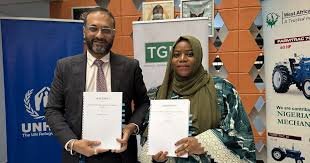

The United Nations High Commissioner for Refugees (UNHCR) in collaboration with Tropical General Investments (TGI) Group has unveiled a new agricultural initiative aimed at expanding livelihoods and economic inclusion in Nigeria.
The three year programme is expected to support more than 5000 farmers while generating over 10000 jobs across Benue and Cross River states. It will focus on vulnerable populations including refugees, internally displaced persons and host communities, with an estimated 25000 to 35000 individuals set to benefit.
Delivered through WACOT Limited, the agribusiness subsidiary of TGI, the project is designed to strengthen key agricultural value chains such as rice, maize, sesame, soy and cocoa. Participating farmers will receive improved farm inputs, technical support, certification and access to organised markets to enhance productivity and income.
The initiative comes against the backdrop of growing global displacement. According to UNHCR’s latest Global Trends report, about 117.8 million people worldwide are currently displaced, representing one in every seventy people. In Nigeria alone, more than 3.8 million people are forcibly displaced, while Nigerians account for 3.5 percent of the global figure.
Speaking on the partnership, UNHCR Representative in Nigeria, Arjun Jain, said the effort reflects a shift from humanitarian aid to sustainable economic empowerment. He noted that linking displaced populations to skills, jobs and markets will enable them to rebuild their lives and contribute meaningfully to society.
Also commenting, Habiba Sulaiman of TGI Group said the company remains focused on driving inclusive growth. She explained that the collaboration not only supports vulnerable communities but also strengthens the company’s supply chains.
Initial groundwork for the project has already commenced, including consultations with government authorities and host communities as well as soil assessments. The initiative builds on an earlier partnership between both organisations in 2024 and signals a growing emphasis on market driven approaches to addressing displacement challenges.