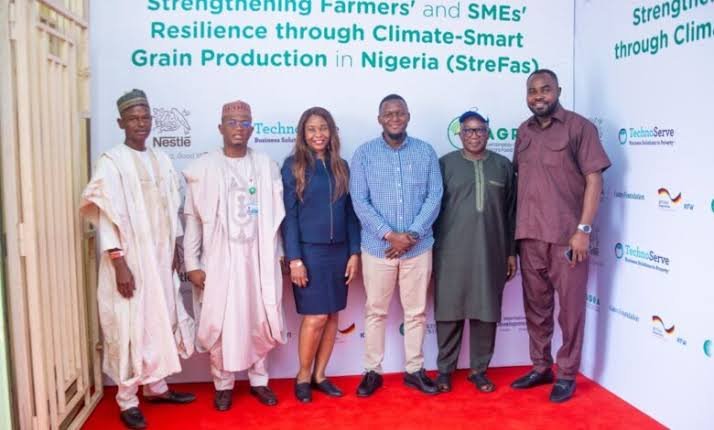

Smallholder farmers adopting regenerative agricultural practices have received financial incentives from Nestlé Nigeria in a move aimed at accelerating sustainable farming, restoring degraded land and strengthening climate resilience.
The incentives were presented during the 2026 International Day of Desertification and Drought commemorated in Zaria, where government officials, development partners, agricultural experts, agribusinesses and farmers renewed calls for greater investment in land restoration and climate-smart agriculture.
The event was organised by TechnoServe Nigeria with support from Alliance for a Green Revolution in Africa and Nestlé Nigeria under the Strengthening Farmers and SMEs Resilience through Climate-Smart Grain Production (STreFaS) project.
Farmers from Kaduna and Nasarawa states who successfully implemented regenerative farming practices during the 2025 cropping season received premium payments in recognition of their efforts to improve soil health, increase productivity and build resilience against climate-related challenges such as drought, erratic rainfall and declining soil fertility.
The three-year STreFaS project has equipped thousands of smallholder farmers and agribusinesses with climate-smart farming techniques, including minimum tillage, cover cropping, agroforestry, mulching, integrated pest management, soil testing and water conservation. The interventions are designed to restore degraded land while improving crop yields and strengthening farmers’ livelihoods.
Speaking at the event, the Country Director of TechnoServe Nigeria, Mrs. Adesuwa Akinboro, represented by the organisation’s Director of Programmes, Mr. Shadrack Gusuu, said healthy soils remain fundamental to food security, resilient livelihoods and sustainable agricultural development.
Representing Nestlé Nigeria, Mr. Alidu Amadu said the company remains committed to promoting sustainable food systems through regenerative agriculture, noting that the premium payment initiative recognises farmers making deliberate efforts to restore degraded land and improve the long-term resilience of their farms.
Also speaking, Dr. Esther Ibrahim called for stronger collaboration among stakeholders to tackle land degradation through farmer-centred interventions, stressing that continued investment in climate-smart agriculture will be critical to improving productivity while protecting the environment.
However, the event reinforced the growing role of regenerative agriculture in addressing desertification, enhancing climate resilience and supporting sustainable food production across Nigeria.