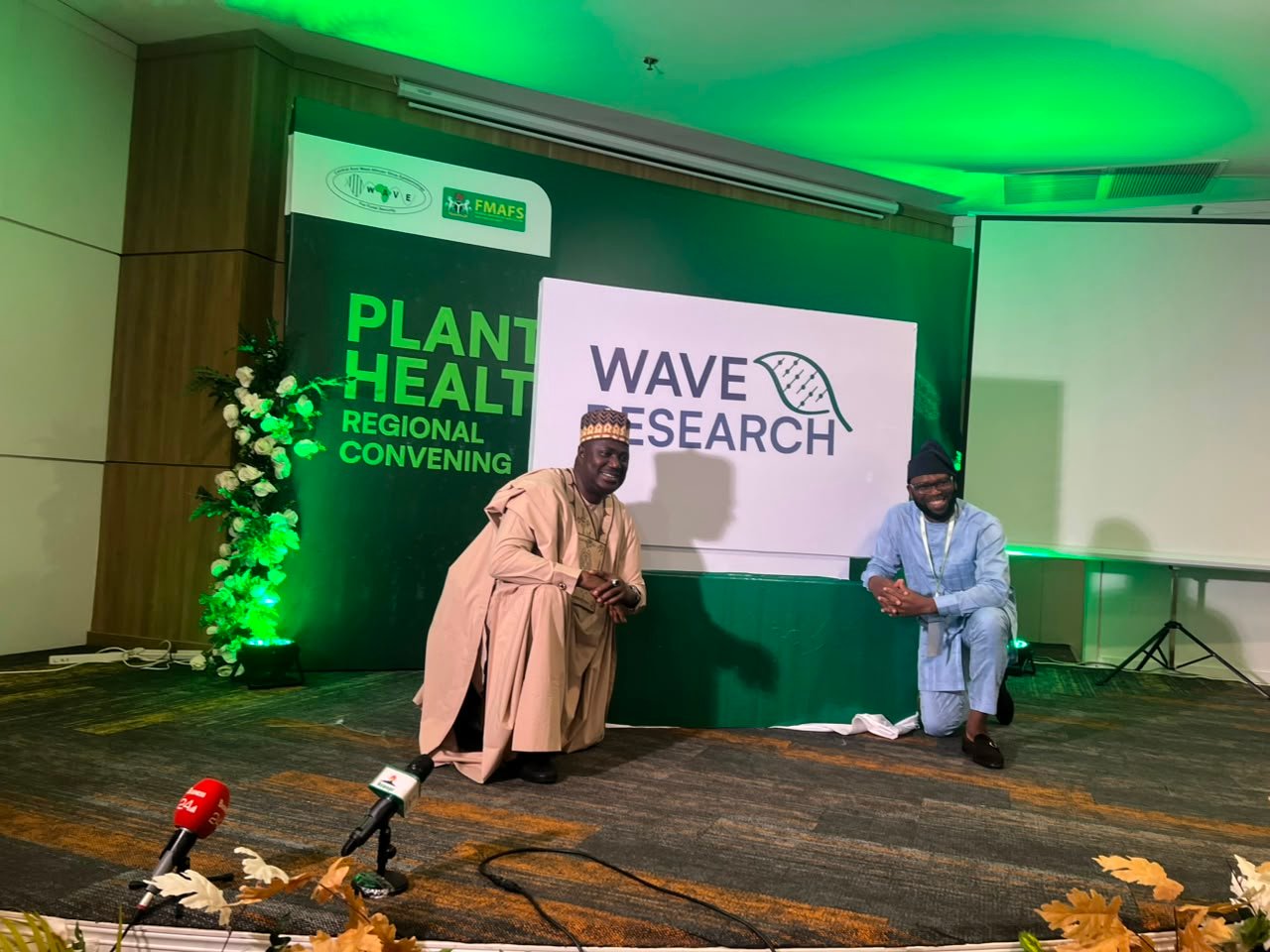

Nigerian agricultural leaders have called for stronger cross-border cooperation to fight plant pests and diseases threatening cassava production across West and Central Africa, warning that the crop’s viral threats do not stop at national boundaries.
The appeal came at the Plant Health Regional Convening, a two-day gathering in Abuja themed “Securing Africa’s Harvest: Scaling Impact Through Plant Health Partnerships in Central and West Africa.”
Professor Chiedozie Egesi, Executive Director and CEO of the National Root Crops Research Institute (NRCRI), said Nigeria must work with neighbours such as Togo and Cote d’Ivoire to contain diseases spread by insect vectors rather than through the air. He urged stakeholders designing containment strategies to give closer attention to the insect vectors driving transmission along the value chain.
Egesi praised NRCRI’s partnership with the West African Virus Epidemiology (WAVE) initiative, calling their joint work on plant health systems and food security commendable. He described cassava as one of Africa’s most important food and industrial crops, sustaining the food supply, income and jobs of millions, and said protecting its health was tied directly to Nigeria’s food security, economic development and national security.
“Without food security, there can be no national security,” he said.
He recalled NRCRI’s earlier mandate to present a strategy against Cassava Brown Streak Disease, a major threat to cassava output in the region, and said the institute continues to treat cassava viral diseases as a priority given how many livelihoods rely on the crop.
Egesi thanked the Minister of State and the Federal Minister of Agriculture for backing the regional initiative and said Nigeria has a central role to play in cross-border cooperation. He said he was encouraged that the convening would assess existing plant health capacities, strengthen regional collaboration frameworks and chart a way forward, adding that a Memorandum of Understanding to be signed with strategic partners during the event would mark a major step toward deeper institutional collaboration.
He called on participants to commit to bold but practical, measurable action on disease surveillance, preparedness, faster response systems and building resilient farming communities, pointing to NRCRI’s ongoing training of Nigerian farmers to identify crop diseases as an example of the grassroots engagement needed. He described securing Africa’s harvest as a shared responsibility requiring sustained partnership among nations, institutions and farming communities.
Also speaking at the event, Hon. Mustapha Othman Bakano, National President of the Nigeria Cassava Growers Association (NCGA), said protecting cassava genetic materials and strengthening the value chain requires collective commitment from government, researchers, farmers and funders.
Bakano described recent progress in the sector as remarkable but called on government to strengthen research institutions and ensure adequate funding reaches researchers. He said mosaic disease and other constraints have hit many farmers hard and remain an ongoing threat, and urged closer collaboration between researchers and funding agencies to develop solutions.
He said the NCGA has held extensive talks with researchers to identify ways to strengthen the sector, and named the dissemination of research findings to farmers, hampered by language barriers, as a major industry challenge. He called for better management of information from the point it is gathered to the point it reaches farmers.
Citing a study visit to Brazil last year, Bakano urged stakeholders to draw lessons from outside West Africa, saying Brazil’s advances in cassava value chain development, research and technology offer models that could be adapted locally to strengthen the sector.