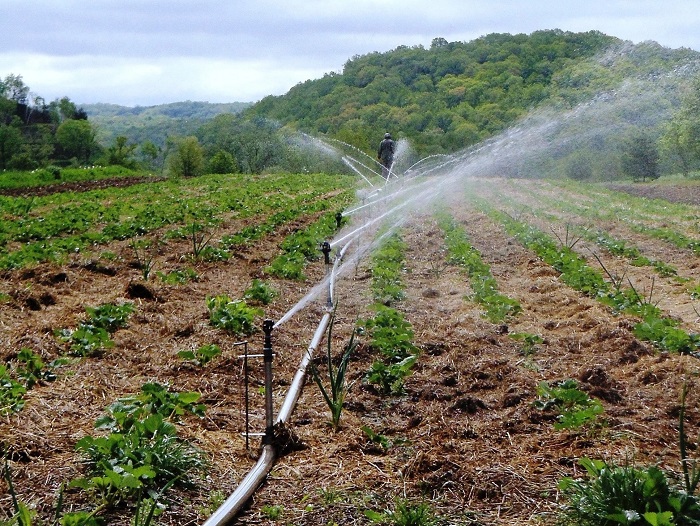

The Kano State Government is stepping up efforts to expand year-round agricultural production, with plans to develop 11 mini dams expected to bring an additional 2,000 acres of farmland under irrigation.
The Commissioner for Agriculture and Natural Resources, Dr. Danjuma Mahmoud, disclosed this at a press conference, saying the projects formed part of the state’s strategy to increase cultivable land, improve farmers’ productivity and strengthen rural livelihoods.
Mahmoud said the government had already restored more than 1,200 acres of farmland through the rehabilitation of irrigation facilities at Jermambaka, Kadawa and Bunkure A and B. A further 200 acres had been recovered through a partnership with the Federal Government and the African Development Bank-supported ATAPS project.
Beyond the mini dams, the state is developing an irrigation facility at Donsushiya, comprising a two-kilometre dam with a water capacity of three billion cubic litres and irrigation channels designed to serve 500 hectares. The project has reached 40 per cent completion, while the 14-kilometre access road constructed to convey heavy equipment to the site has been completed.
The proposed mini dams will be located in Bebeji, Kibiya, Sumaila, Doguwa, Shanono, Dawakin Kudu, Gaya, Rogo, Dala, Dawakin Tofa and Ungogo local government areas. The commissioner said compensation had been paid in at least six locations, with contractors already mobilised to some sites, including Bebeji.
He said the expanded irrigation network would support farming activities, generate employment, improve household incomes and discourage rural residents from migrating to urban centres in search of livelihoods.
To strengthen agricultural production, the state has also acquired tractors, combine harvesters, threshers, solar-powered irrigation pumps, planters and transplanters for free distribution to registered and credible farmers’ cooperatives.
On livestock development, Mahmoud disclosed that about 7,800 cattle had been distributed under the state’s intervention programmes, while more than 13,000 beneficiaries had received livestock support, including goats for women and rams for youths.