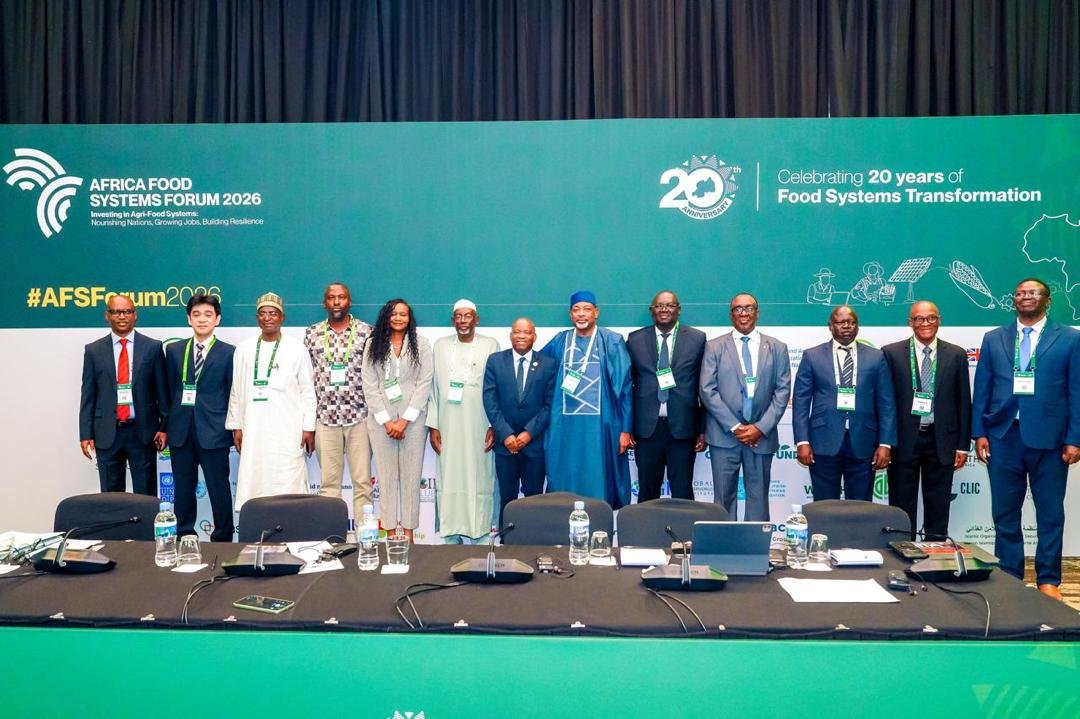

Nigeria’s Minister of Livestock Development, Alhaji Idi Mukhtar Maiha, has challenged African governments to overhaul the continent’s approach to food security by placing livestock at the heart of efforts to tackle conflict, energy shocks, unemployment and recurring food shortages.
Maiha made the call in Kigali, Rwanda, during high-level engagements at the Africa Food Systems Forum 2026, where he urged governments, development finance institutions and private investors to move away from fragmented agricultural interventions and build integrated, commercially viable livestock value chains.
Speaking before policymakers, development-finance leaders, researchers and investors, the Minister argued that Africa’s vulnerability to global shocks was being amplified by its dependence on imported fuel, fertiliser, feed, breeding materials, veterinary supplies, machinery and processed food.
He said the solution was for African countries to build what he described as “productive sovereignty” — the capacity to produce, process, finance and trade from a position of strength while remaining connected to regional and global markets.
“The unit of livestock transformation is not the animal alone,” Maiha said. “It is the complete value chain around the animal.”
The Minister’s intervention came as the 20th edition of the Africa Food Systems Forum, themed “Investing in Africa’s Agri-Food Systems: Nourishing Nations, Growing Jobs, Building Resilience,” brought together thousands of delegates from Africa and beyond.
Maiha used the platform to highlight Nigeria’s ongoing livestock reforms under President Bola Ahmed Tinubu, particularly the establishment of the Federal Ministry of Livestock Development, which he said had elevated livestock from the margins of agricultural policy to a central pillar of Nigeria’s food-security and economic-transformation agenda.
He identified the National Livestock Growth Acceleration Strategy as the sector’s long-term policy framework, the Nigerian Livestock Economic Advancement Program as the flagship investment vehicle, and the World Bank-backed Livestock Productivity and Resilience Support Project as a complementary implementation platform.
At an African Development Bank side event on emergency food production, Maiha said Africa must learn from recent food crises and build systems capable of absorbing future shocks rather than relying primarily on emergency interventions.
He pointed to the African Development Bank’s $1.5 billion emergency food-production facility, launched following disruptions to global cereal supplies after the Russia-Ukraine war, as an example of the continent’s ability to mobilise resources during crises.
However, he maintained that Africa must now shift from emergency responses to long-term investment in productive capacity, with livestock integrated into food systems through reliable feed supplies, improved genetics, animal health, water infrastructure, processing facilities, cold chains, insurance and dependable markets.
At a ministerial roundtable examining food systems under conflict and energy pressure, Maiha said food security could not be separated from energy security.
He noted that diesel costs, unreliable electricity and currency volatility affect virtually every stage of livestock production, from pumping water and producing feed to transporting animals, chilling milk and operating abattoirs.
The Minister therefore advocated greater deployment of solar energy, biogas, efficient irrigation and energy-saving processing technologies across Africa’s agricultural and livestock sectors.
He also called for stronger intra-African trade and regional cooperation, arguing that individual countries did not need to produce every critical agricultural input as long as the continent could collectively source essential supplies from within Africa.
According to him, harmonised standards, credible traceability systems and functional trade corridors would be critical to reducing Africa’s dependence on external supply chains and strengthening regional food security.
On financing, Maiha urged governments to deploy scarce public funds strategically, particularly toward public goods and early-stage risk absorption capable of attracting commercial lending, guarantees, insurance and private capital.
The Minister’s message was reinforced at a subsequent Livestock Ministerial Roundtable, where he called for Africa to move from policy discussions to large-scale implementation.
He said the continent already possessed proven livestock technologies and delivery models but needed to align policy, finance, infrastructure, science, data and markets to achieve impact at scale.
Maiha proposed a standing ministerial delivery platform, a pipeline of investment-ready livestock projects, stronger animal identification and veterinary certification systems, an African feed-security compact and a blended-capital investment coalition.
He further argued that future assessments should focus on identifiable financing partners and publicly reported results rather than broad policy commitments.
Representatives from eight countries, including Nigeria, subsequently pledged to strengthen livestock value chains, unlock investment and deepen partnerships aimed at scaling solutions across the continent.
The participating countries also backed the continuation of the Ministerial Platform as a delivery mechanism reporting through the African Union’s Biennial Review process.
Five priorities emerged from the discussions; financing tailored to livestock’s biological production cycles; greater regional trade through harmonised standards and coordinated disease control; credible national herd data and traceability; stronger institutional and budgetary support for livestock; and sustained peer learning, particularly around financing animal-health systems.
For Nigeria, Maiha used the Kigali forum to showcase the country’s emerging livestock investment architecture.
“The National Livestock Growth Acceleration Strategy seeks to increase the value of Nigeria’s livestock sector from an estimated $32 billion to about $74 billion by 2035 through productivity improvements, commercialisation and market integration.
“The Nigerian Livestock Economic Advancement Program has a national financing ambition of $500 million, with an initial phase of approximately $175 million subject to appraisal and approvals.”
Maiha said the programmes would complement rather than duplicate the existing World Bank-backed resilience project, building on its institutions and data while introducing additional financing, insurance, infrastructure and market components under unified ministerial leadership.
Under the model, state governments would identify livestock corridors and priorities in consultation with local communities, while the Federal Government would provide policy coordination and private investors would supply capital, technology and market access.
The Minister said the approach would help reduce competition over land and water while creating jobs, expanding rural economies and contributing to peace and stability in farming communities.
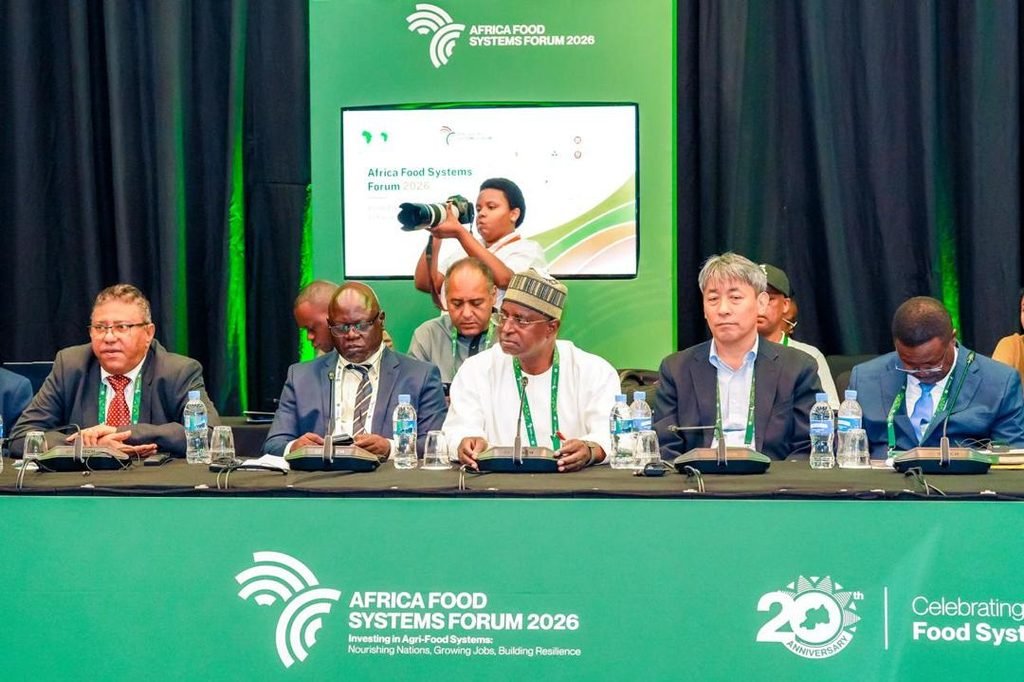
Nigeria also proposed a coordinated investment framework involving the African Development Bank, French and Islamic development finance institutions, the World Bank, the Food and Agriculture Organization of the United Nations, research institutions and private investors.
The broader objective, Maiha said, is to ensure that livestock development is no longer treated as an isolated agricultural concern but as a strategic driver of food security, industrialisation, economic growth and social stability.
“Africa’s resilience will depend not on disconnected projects, but on building complete value chains that connect feed, genetics, animal health, energy, finance, processing, logistics and markets,” the Minister emphasized.
Nigeria, he said, is prepared to work with African governments, development partners and investors to take that transformation from policy commitments to investment and implementation at scale.