
The Central and West African Virus Epidemiology for Root and Tuber Crops (WAVE) has launched a sensitisation campaign for cassava farmers in Kebbi State as concerns grow over the possible spread of a highly destructive cassava mosaic virus into Nigeria.
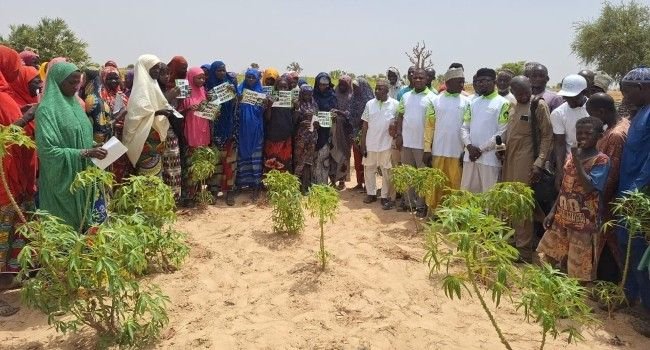
The awareness programme, held at Tungar Noma community in Argungu Local Government Area, focused on educating farmers about the dangers posed by emerging cassava diseases capable of devastating plantations and threatening food security across the region.
Country Director of WAVE, Ibrahim Umar, said the initiative was part of ongoing efforts to strengthen early detection and disease management systems among cassava farmers.
He disclosed that WAVE, in collaboration with Abdullahi Fodio University of Science and Technology, Aliero, had established six demonstration plots across the North-West and North-East to improve cassava productivity and help farmers identify disease symptoms early.
According to him, while cassava mosaic disease already exists in Nigeria, several other variants affecting cassava crops across Africa are gradually spreading towards West Africa.
Umar identified the East African Cassava Mosaic Disease-Uganda variant as one of the most dangerous strains, warning that infected farms could suffer total crop loss.
“The disease has already been reported in some West African countries, though it has not yet been detected in Nigeria,” he said.
He stressed that Nigeria’s position as the world’s largest cassava producer makes the country highly vulnerable to severe economic and food security consequences if the virus eventually crosses into local farms.
The WAVE director explained that the sensitisation campaign was designed to encourage farmers to actively participate in disease surveillance by promptly reporting unusual symptoms observed on cassava plants.
As part of the intervention, farmers were provided with flyers containing photographs of disease symptoms alongside contact numbers for rapid reporting and response.
Umar noted that the initiative was already recording positive results, with several farmers reaching out to the centre after noticing suspicious signs on their farms.
He emphasised that early detection, rapid reporting, and immediate response remain critical in preventing the spread of the virus into Nigeria’s cassava-producing communities.