
The Federal Government has expressed concern over the increasing influx of subsidised agricultural imports into Nigeria, warning that the trend is weakening local production, discouraging investment and threatening the country’s quest for food security and agricultural self-sufficiency.
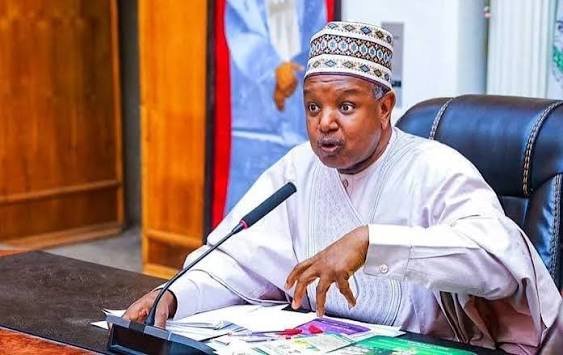
Minister of Budget and Economic Planning, Senator Abubakar Bagudu, raised the concern at the second biannual meeting of the Agrifood Systems Working Group in Abuja, where he called for stronger collaboration among government institutions, development partners, researchers and the private sector to address both domestic and global challenges confronting Nigeria’s agricultural sector.
Bagudu said artificially cheap agricultural products entering the Nigerian market through unfair trade practices are placing local farmers at a disadvantage and undermining efforts to build a resilient agrifood system capable of driving long-term economic growth.
He noted that the pressure on the sector has been compounded by rising fertiliser and energy costs linked to global conflicts, adding that these challenges continue to affect agricultural productivity and the entire value chain.
The minister reaffirmed President Bola Tinubu’s commitment to making agriculture a key driver of economic diversification, poverty reduction and food security, stressing that Nigeria’s more than 42 million farming households remain at the centre of that vision.
According to him, improving farmers’ access to finance, mechanisation, improved seedlings, technology and profitable markets will boost food production, strengthen rural livelihoods and reduce the country’s dependence on food imports.
Bagudu acknowledged that insecurity continues to disrupt farming activities in parts of the country but said ongoing reforms under the Renewed Hope Agenda are designed to strengthen the sector against both domestic and external shocks. He cited the establishment of the Federal Ministry of Livestock Development, increased support for the National Agricultural Development Fund (NADF) and the National Agricultural Land Development Authority (NALDA), as well as greater investment in science, innovation and climate-smart agriculture.
He maintained that agriculture should not be seen as the sole responsibility of the government, urging researchers, financial institutions, development partners and private investors to play more active roles in transforming the sector.
The minister also said Nigeria’s agricultural sector recorded notable growth, expanding from ₦96.46 trillion in 2024 to ₦101.46 trillion in 2025, while real growth improved from 1.69 per cent to 2.92 per cent, reflecting the sector’s increasing contribution to the economy despite prevailing challenges.
Bagudu noted that although the African Union’s agricultural development framework covers the 2026-2035 period, President Tinubu has set a more ambitious national target of lifting millions of Nigerians out of poverty by 2030 through inclusive economic growth, improved livelihoods and enhanced food security.
He described food security as a central pillar of Nigeria’s development agenda, adding that the country’s more than 42 million agricultural households, mostly smallholder family farmers, remain the backbone of national food production.
“The success of Nigeria’s food system depends on empowering our millions of farming households with the support, technology, financing and market opportunities they need to produce more efficiently and improve their incomes,” he said.
Bagudu also commended the Minister of Agriculture and Food Security, Senator Abubakar Kyari, for leading the implementation of the Comprehensive Africa Agriculture Development Programme (CAADP) 2026-2035, saying the continental framework aligns with Nigeria’s long-term goal of building a resilient, inclusive and sustainable food system.