
Nigeria’s Federal Ministry of Livestock Development is making a bold move. The ministry has announced plans to forge a strategic Nigeria livestock ministry FUNAAB alumni partnership that could reshape the country’s agricultural landscape and put billions of dollars back into the economy.
The announcement came during the 27th–28th Annual Global Convention of the Federal University of Agriculture, Abeokuta (FUNAAB) Alumni Association, held on May 2, 2026, at the university’s Senate Red Chamber.
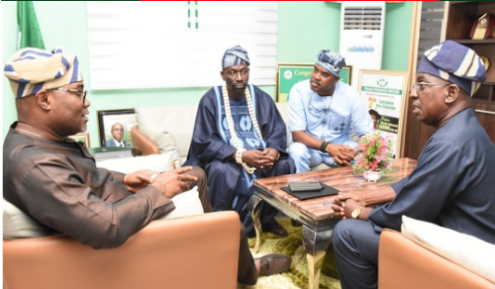
A representative of the Honourable Minister of Livestock Development, Dr. Richard Mark Mbaram, who serves as Special Adviser on Knowledge Management and Communication, delivered the ministry’s position. He made clear that the government sees academic and professional networks like the FUNAAB Alumni Association as critical partners in repositioning Nigeria’s livestock sector.
The ambition behind this Nigeria livestock ministry FUNAAB alumni partnership is enormous. The ministry is targeting an expansion of the livestock sector’s contribution to Nigeria’s economy, with plans to grow it from the current $32 billion to $74 billion within the next ten years. That target, if achieved, would nearly double the sector’s economic footprint in just a decade.
The push will be driven by the Livestock Growth Acceleration Policy, which focuses on improving productivity, strengthening value chains, and encouraging investment across the sector. Alongside this, the proposed National Livestock Economic Programme is designed to enhance the overall performance of the livestock industry, stimulate growth, improve efficiency, and create opportunities for value addition.
During the convention, the minister’s representative also conducted an inspection tour of FUNAAB’s facilities, visiting the university’s livestock farms, abattoir centre, and solar-powered engine room. He reportedly commended the institution for its work in research, innovation, and sustainable agricultural practices, exactly the kind of capacity the ministry hopes to tap through this collaboration.
The move signals a broader push by the federal government to leverage institutional expertise in driving real, measurable change in the livestock space. With food security concerns growing and Nigeria’s rural economy under pressure, a partnership of this scale between government and academia could not come at a better time.