
Vice President Kashim Shettima has demanded stronger accountability in the implementation of Nigeria’s food-systems interventions, particularly the $500 million Nigeria Sustainable Agricultural Value-Chains for Growth (AGROW) programme.
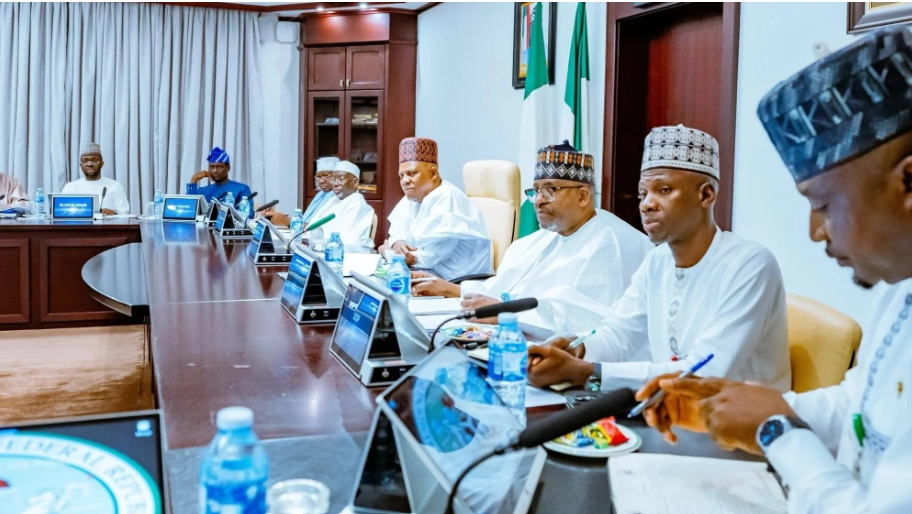
Shettima, who chairs the Steering Committee of the Presidential Food Systems Coordinating Unit (PFSCU), gave the directive at the Committee’s seventh meeting held at the State House, Abuja.
The meeting brought together state governors, federal ministers, private-sector stakeholders and development partners to assess the country’s food-systems outlook and strengthen coordination around areas requiring urgent intervention.
Shettima said resources committed to food and agricultural programmes must produce visible results for farmers, markets and households, stressing the need for greater transparency in ongoing interventions.
The Committee reviewed progress on AGROW, the National Agribusiness Policy Mechanism, the National Agro-Productivity System and the National Food and Nutrition Crisis Preparedness Framework anchored in the Office of the National Security Adviser.
The $500 million AGROW programme, approved by the World Bank in April 2026 as an International Development Association credit, is designed to improve agricultural productivity, strengthen value chains and advance food security in Nigeria.
The PFSCU said the design and coordination phase of the programme had been completed, with implementation now transitioned to the Federal Ministry of Agriculture and Food Security and participating states.
The Committee also considered the use of data and intelligence to identify emerging production, market, nutrition and security pressures, directing relevant institutions to concentrate interventions in states, markets and communities where the need is greatest.
Shettima said the government must strengthen Nigeria’s capacity to produce more food domestically while ensuring that households can access food at affordable prices.
With the main harvest season providing an opportunity to increase domestic supply, the meeting examined measures to support farmers, improve the movement of food from producing areas to consumers and strengthen strategic reserves.
Participants also assessed how transportation, logistics, levies and market access contribute to the final cost of food, with emphasis on making distribution between production and consumption centres more efficient.
Governor Umar Namadi of Jigawa State called for continued focus on farmers, particularly through irrigation, inputs, financing, production support and access to markets.
The Minister of Finance and Coordinating Minister of the Economy, Taiwo Oyedele, meanwhile, emphasised the need for domestic production and trade policies to work together rather than operate in isolation.
PFSCU Executive Secretary, Ms Marion Moon, said the unit was focused on providing the government with reliable evidence to enable early and targeted action across the food system.
The Committee also noted that trade measures could support domestic production and address verified supply gaps, but stressed that such decisions must take into account strategic reserves, market conditions and incentives for Nigerian farmers and agribusinesses.
The World Bank’s $500 million financing for AGROW was approved in April to address persistent challenges in Nigeria’s agricultural sector, including low productivity, climate-related shocks and limited market access.