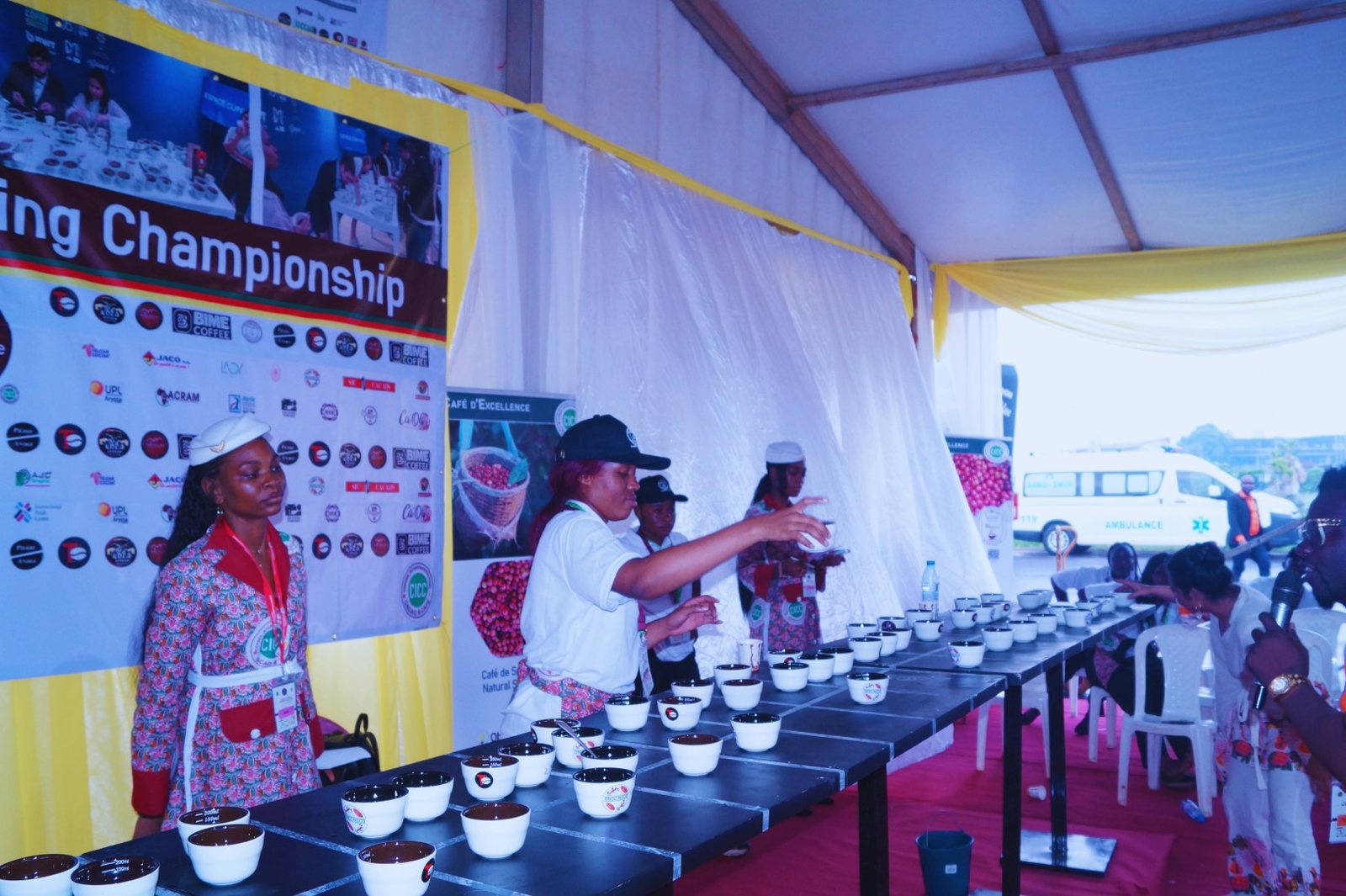

Africa is set to host one of its most consequential agricultural gatherings in years, as climate shocks, disease outbreaks, price swings, and tightening sustainability rules continue to reshape the global cocoa and coffee trade.
Nigeria will host the Cocoa and Coffee Fiesta 2026 in Lagos on October 7 and 8, drawing governments, researchers, farmers, investors, and development partners from across Africa and beyond. The event is organised by the Cocoa and Coffee Farmers Alliance Association of Africa (COCEFAAA), working alongside the Federal Ministry of Agriculture and Food Security, the Cocoa Research Institute of Nigeria, and producing states.
Here are 10 facts to know about the landmark event.
1. Three regions, one agenda. Themed “Building a Sustainable Value Chain for Cocoa and Coffee Across West, Central and East Africa,” the Fiesta breaks from single-country commodity conferences to push a continental strategy for tackling climate change, low productivity, and weak farmer incomes.
2. Nigeria wants to lead the continent. Hosting the Cocoa and Coffee Fiesta 2026 reflects Nigeria’s ambition to reclaim ground in both crops, with the Nigeria Coffee Revival Initiative driving public-private partnerships, better soil management, and stronger farmer support systems.
3. Africa’s cocoa dominance, coffee gap. The continent produces about 70 percent of global cocoa output, led by Côte d’Ivoire, Ghana, Cameroon, and Nigeria. Coffee tells a different story, with Africa contributing only around 12.5 percent of global supply despite ideal growing conditions across Ethiopia, Uganda, Kenya, and Tanzania.
4. Markets are booming. Organisers project the global cocoa market will grow from roughly $169.12 billion to $245.97 billion by 2035, while coffee expands from $284.8 billion to $486.2 billion over the same period, signalling major upside for African producers who invest in processing and value addition.
5. A new pan-African alliance launches. The Fiesta marks the formal unveiling of COCEFAAA itself, the first continent-wide body dedicated solely to cocoa and coffee farmers, with a mandate covering fair pricing, climate resilience, and ending child and forced labour in the sector.
6. Tough conversations are on the table. Sessions will dig into price volatility, compliance with the EU Deforestation Regulation, carbon credits, agroforestry, and strategies to move both crops away from raw commodity status.
7. The timing is critical. West Africa lost up to 40 percent of its cocoa harvest across 2023 and 2024 to drought and the Cacao Swollen Shoot Virus, with global output falling roughly 13 percent and prices spiking. Fresh El Niño-linked declines are feared for the 2025/26 season.
8. Synthetic cocoa sparks debate. As multinational firms invest in lab-grown cocoa, COCEFAAA argues the smarter path is funding disease-resistant crops and living-income programmes for the farmers who already supply most of the world’s chocolate industry.
9. Coffee farmers face parallel pressure. Rising costs, erratic weather, and the Coffee Barometer 2026’s concerns over farmer compensation mean coffee growers are battling many of the same structural problems as their cocoa counterparts.
10. A platform to reset the future. Beyond exhibitions, the Cocoa and Coffee Fiesta 2026 is positioned as the place where governments, farmer cooperatives, investors, and global institutions chart a path toward better incomes, more local processing, and stronger climate resilience across Africa’s two flagship cash crops.