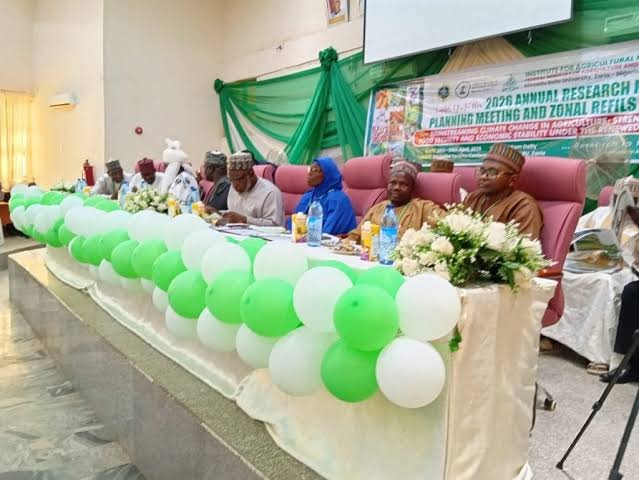

The Kaduna Agro-Climatic Resilience in Semi-Arid Landscapes Project has partnered with the Institute for Agricultural Research (IAR) to improve agricultural productivity through the deployment of improved seeds and climate-smart farming technologies.
The Project Coordinator, Hadiza Halid, disclosed this on Tuesday in Kaduna, saying the collaboration was aimed at helping farmers adopt production methods that can withstand the growing effects of climate change.
According to Halid, the partnership would promote improved seed varieties, climate-smart agricultural practices and modern farming techniques across seven targeted watersheds in the state.
The watersheds include Kudan, Kubau, Lere, Zaria, Sakadadi, Kafanchan and Giwa.
She said the project would establish demonstration farms where farmers could gain practical experience with improved production methods, while selected beneficiaries would also receive training in seed production, marketing and sustainable agricultural practices.
Halid added that improved cowpea varieties had already been distributed to farmers with technical support from IAR, Ahmadu Bello University, Zaria.
“Access to quality seeds is critical to improving yields and helping farmers adapt to changing climatic conditions,” she said.
She explained that the demonstration sites would give farmers an opportunity to test research-backed technologies under local conditions and determine their effectiveness before adopting them on a wider scale.
The coordinator noted that the need for climate-smart agriculture had become more urgent as farmers continued to face unpredictable rainfall, flooding, prolonged dry periods and rising temperatures.
She said the adoption of climate-resilient practices would enable farmers to improve output while protecting vital natural resources, particularly soil and water.
Beyond production, Halid said the partnership would strengthen the agricultural value chain by equipping farmers with skills in processing, storage, marketing and value addition.
She stressed that increased production would have limited economic benefits if farmers were unable to access viable markets and secure profitable returns for their produce.
Halid said the initiative was also in line with the Kaduna State Government’s agricultural development agenda under Governor Uba Sani, particularly its efforts to strengthen food security and improve the livelihoods of farmers.
She added that women and young people would be encouraged to participate in agricultural value chains, especially in areas capable of generating employment and supporting small-scale enterprises.
According to her, the collaboration would help close the gap between agricultural research institutions and farming communities by ensuring that farmers have greater access to improved technologies and practical innovations.
She said the partnership was expected to increase the adoption of climate-smart farming methods, raise agricultural yields and promote stronger agribusinesses across Kaduna State.