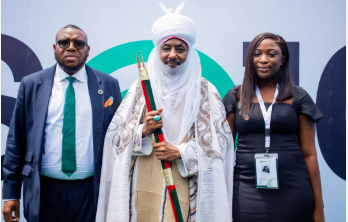

The Emir of Kano, Muhammadu Sanusi II, has warned that Nigeria’s reliance on food imports to ease rising prices could weaken local agricultural production, citing the collapse of rice mills and mounting bad loans linked to investments in the sector.
Sanusi spoke at the Sustainable Table Series in Lagos on Thursday, where he criticised the decision to open the market to food imports, including rice from Thailand, following the removal of the petrol subsidy and a surge in food prices.
“All the rice mills that people built were wiped out. All the loans that the banks gave people in the agriculture chain, bad loans,” he said.
While acknowledging the need to make food affordable for low-income households, the emir urged the government to support vulnerable citizens without exposing local farmers and agribusinesses to overwhelming competition from imports.
He also called for greater investment in rural infrastructure, arguing that roads, electricity and bridges should connect farmers to markets and communities to essential services.
Sanusi further warned that malnutrition was undermining Nigeria’s human capital, citing figures indicating that more than 50 per cent of children under five in Kano State were malnourished, while about 40 per cent of women of childbearing age were anaemic.
He called for nutritional support to begin during pregnancy and continue through early childhood, alongside stronger foundational and technical education to prepare young people for productive employment.
On fiscal policy, the emir raised concerns about Nigeria’s debt-servicing burden and urged greater transparency and accountability, stressing that citizens would be more willing to accept economic reforms if they saw tangible improvements in public services.
Lagos State Governor Babajide Sanwo-Olu, represented by his Special Adviser on Sustainable Development Goals, Oreoluwa Finnih-Awokoya, said the state was prioritising infrastructure, education, environmental protection and skills development.
He said Lagos’ N4.4 trillion 2026 budget allocated N2.338 trillion to capital projects, while the Lagos Education Access Fund aimed to reach more than 200,000 children within three years.
The event, themed “Leading the Sustainable Development Agenda: People, Planet and Development,” also featured calls by convener Kayode Olaniyan for increased investment in energy, technology, human capital and food storage to reduce post-harvest losses and food inflation.