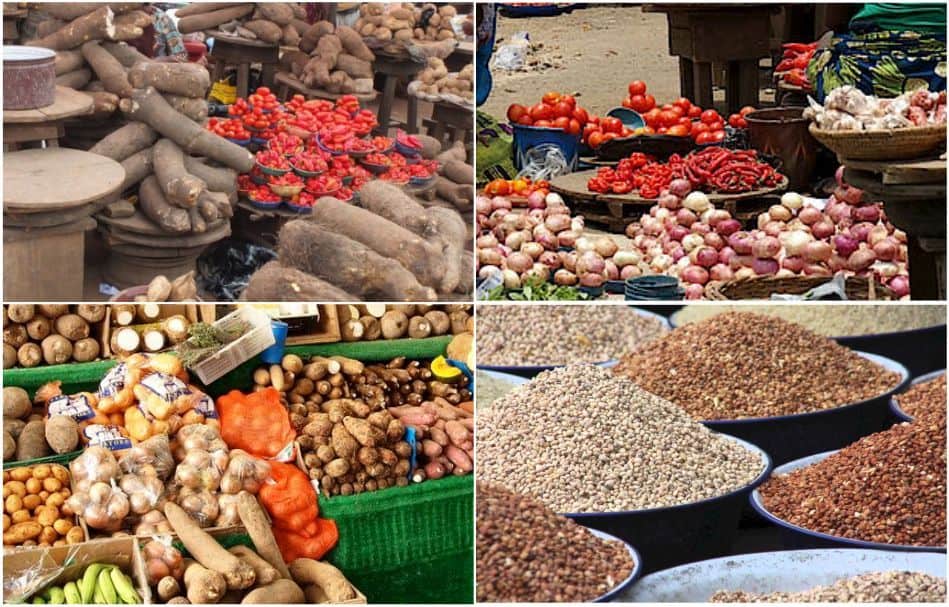

The Federal Government says the cost of some major food items has fallen by as much as 50 per cent in different parts of Nigeria, citing increased agricultural production and expanded support for farmers.
The Minister of Agriculture and Food Security, Abubakar Kyari, made the disclosure in Maiduguri, Borno State, on Monday while opening a Community of Practice Meeting involving state commissioners responsible for agriculture, health, environment and rural development.
The meeting, organised by the Federal Ministry of Agriculture and Food Security in partnership with the Borno State Government, received support from the German government and focused on the theme, “Stronger Partnerships for a Food Secure Nigeria.”
Kyari said the decline in food prices should be assessed against the sharp increases recorded before the present administration came into office in 2023.
He challenged stakeholders to compare the current prices of staples such as rice and maize with their 2023 levels, saying the figures showed that the government’s agricultural interventions were beginning to produce results.
According to him, efforts by the administration of President Bola Tinubu have focused on boosting domestic food production while improving access to agricultural inputs, strengthening rural infrastructure and supporting small scale farmers.
The minister said food security remained a major priority of the Federal Government, adding that the ultimate objective was to make food more affordable while creating stronger rural economies and a more resilient agricultural sector.
He said the discussions in Borno were also important because Nigeria was preparing to implement commitments contained in the Kampala Comprehensive Africa Agriculture Development Programme Declaration and its Strategy and Action Plan for 2026 to 2035.
Kyari explained that the Kampala framework goes beyond food production, covering areas including agricultural financing, trade, nutrition, investment, inclusion, climate resilience and governance.
He said Nigeria’s recently validated 10 year National Agrifood System Strategy and Action Plan would provide the framework for translating the international commitments into domestic programmes.
The minister urged state governments to use the meeting to develop practical measures that would support the national agricultural agenda.
He identified rural infrastructure, agricultural extension services, access to credit and quality inputs, labour saving technology, reduction of post harvest losses and climate resilient farming as areas requiring greater attention.
Kyari said the decisions taken by Nigeria would have implications not only for its citizens but also for regional food markets and Africa’s broader agricultural transformation.
Also speaking at the event, the Head of Development Cooperation at the German Embassy in Nigeria, Dr Karin Jansen, pledged Germany’s continued assistance to the country’s agricultural sector.
Jansen said German Development Cooperation, through its Sustainable Agricultural Systems and Policies project, known as AgSys, would continue working with Nigerian institutions to improve agricultural policy, expand effective programmes and promote the participation of civil society.
She said the focus was on strengthening structures already in place and helping government commitments translate into practical outcomes for Nigerians.
According to her, the success of the Kampala agenda should ultimately be judged by improvements in policies, institutions, investments and the living conditions of the people.