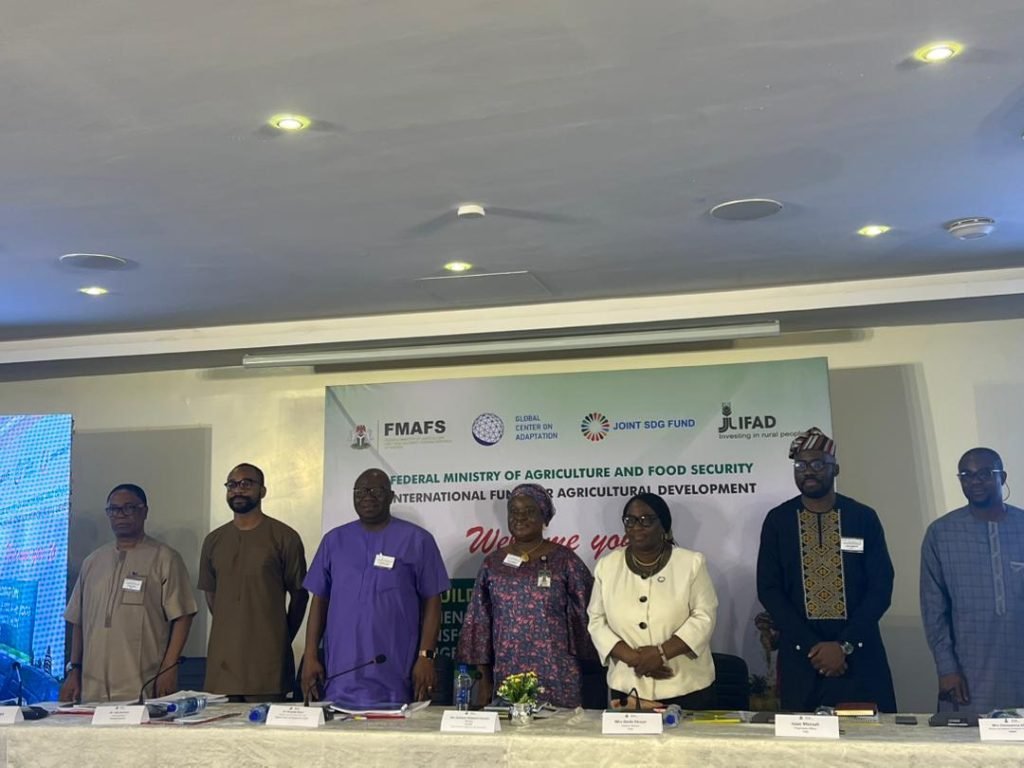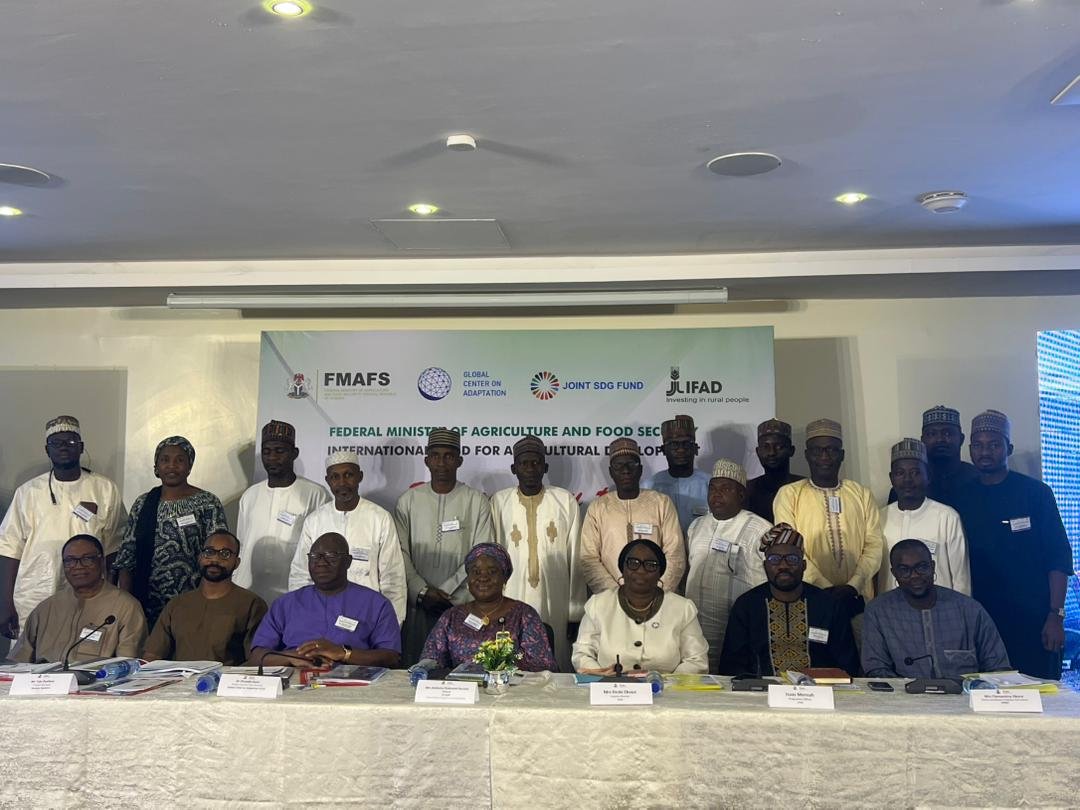

The Federal Government and its partners have reaffirmed their commitment to strengthening climate resilience and ensuring the successful implementation of the Value Chain Programme in Northern Nigeria (VCN), as stakeholders gathered in Abuja for a capacity-building workshop focused on climate risk, adaptation and climate finance mobilisation.
Speaking at the workshop on Tuesday, the Director of the Federal Department of Development Partners Projects at the Federal Ministry of Agriculture and Food Security, Mrs. Adebola Iluromi, said the VCN is being implemented at a time when climate change has become an immediate and pressing challenge.
She noted that the impacts of climate change are already being felt through droughts, floods, heat stress, land degradation and growing livelihood pressures, particularly in vulnerable rural communities.
According to Iluromi, the workshop provides an important platform to move beyond broad awareness toward practical, state-specific and value chain-focused actions that align with the design of the VCN programme and Nigeria’s food systems transformation agenda.
“This workshop is focused on building the foundations for effective climate finance mobilisation so that we can scale up climate adaptation and resilience outcomes,” she said.
She added that the initiative reflects Nigeria’s commitment under the CAADP Kampala Declaration, which calls on member states to build inclusive, resilient and sustainable agrifood systems.
Iluromi stressed that climate finance mobilisation goes beyond securing funding. She said it also involves strengthening institutional readiness, improving investment planning and demonstrating measurable results that can attract additional support from development partners.
She urged agricultural stakeholders to embrace digital climate solutions as part of efforts to improve resilience across agricultural value chains.
According to her, digital tools such as weather and climate information services, early warning systems, geospatial risk mapping, and digital monitoring and reporting can help direct adaptation investments more effectively, improve preparedness, strengthen transparency and ensure that farmers receive timely and actionable information.
She also called on implementing teams across federal and state Ministries, Departments and Agencies (MDAs) to identify practical ways of integrating climate solutions into VCN planning and delivery, while building the partnerships and institutional capacity needed to sustain them.
“Achieving the outcomes we seek through VCN will require strong coordination between the Federal Government, participating states and all relevant MDAs,” she said.
Iluromi reaffirmed that the Federal Government would continue to work closely with the International Fund for Agricultural Development (IFAD), the Global Center on Adaptation (GCA), the Agence Française de Développement (AFD), participating states and other partners to ensure that knowledge gained from the workshop translates into stronger planning, better investments and tangible results for farmers, rural enterprises and food systems across the nine VCN states.
Also speaking, the International Fund for Agricultural Development Country Director, Mrs. Dede Ekoue, described the workshop as a critical step toward operationalising the VCN programme and securing its long-term sustainability.
She said the workshop followed the successful conclusion of a high-level stakeholder engagement that produced a joint roadmap for the programme’s accelerated start-up and first disbursement.
According to Ekoue, the implementation plan provides a strong foundation for coordinated action aimed at translating early investments into measurable outcomes that strengthen resilience across agricultural value chains in Northern Nigeria.
She observed that agriculture remains central to the region’s economy but is increasingly exposed to climate shocks and environmental degradation.
Ekoue explained that the Climate Risk and Vulnerability Assessment (CRAVA) would serve as a strategic guide for identifying vulnerable areas and prioritising climate-smart investments, including solar-powered irrigation systems and flood-tolerant seed varieties.
She further stressed the need to leverage climate finance to expand the impact of initial investments under the VCN programme.
According to her, accessing global climate finance requires credible, investment-ready frameworks, and integrating climate adaptation strategies into ongoing interventions will help de-risk agricultural investments while positioning Northern Nigeria to attract additional international funding.
She urged technical experts from federal and state institutions to use the workshop to refine strategies that will support effective implementation and unlock future financing opportunities.
Ekoue added that stronger institutional capacity, combined with digital and data-driven agricultural solutions, will be essential for building a resilient, inclusive and economically viable agrifood system.
In his remarks, the Global Program Lead for Food Security and Rural Wellbeing at the Global Center on Adaptation (GCA) Netherlands, Dr. Olu Ajayi, underscored the urgent need to strengthen climate resilience among smallholder farmers in Nigeria and across Africa.
He said agriculture remains critical to economic development, contributing significantly to national income, rural employment and poverty reduction.
However, he warned that the sector remains highly vulnerable to climate shocks, while smallholder farmers who drive food production often have limited access to finance and adaptation solutions.
Ajayi said targeted adaptation interventions are essential to improving productivity, protecting livelihoods and building resilience in farming communities.
He explained that GCA’s technical support to the VCN programme focuses on five major areas: assessing climate vulnerability and identifying adaptation solutions across key value chains in participating states; developing a climate adaptation financing plan to scale up impact; providing digital agriculture support through dedicated expertise; conducting capacity building on climate resilience in northern states; and developing a comprehensive climate adaptation strategy.
He expressed optimism that the workshop would strengthen collaboration among stakeholders and support the successful implementation of projects aimed at building resilient communities.
The workshop attracted participants from government agencies, development partners and implementing institutions, all working toward advancing climate resilience and food security in Nigeria.
Stakeholders said the engagement is expected to strengthen technical knowledge, deepen collaboration and accelerate the transition toward a climate-resilient agricultural sector in Northern Nigeria.