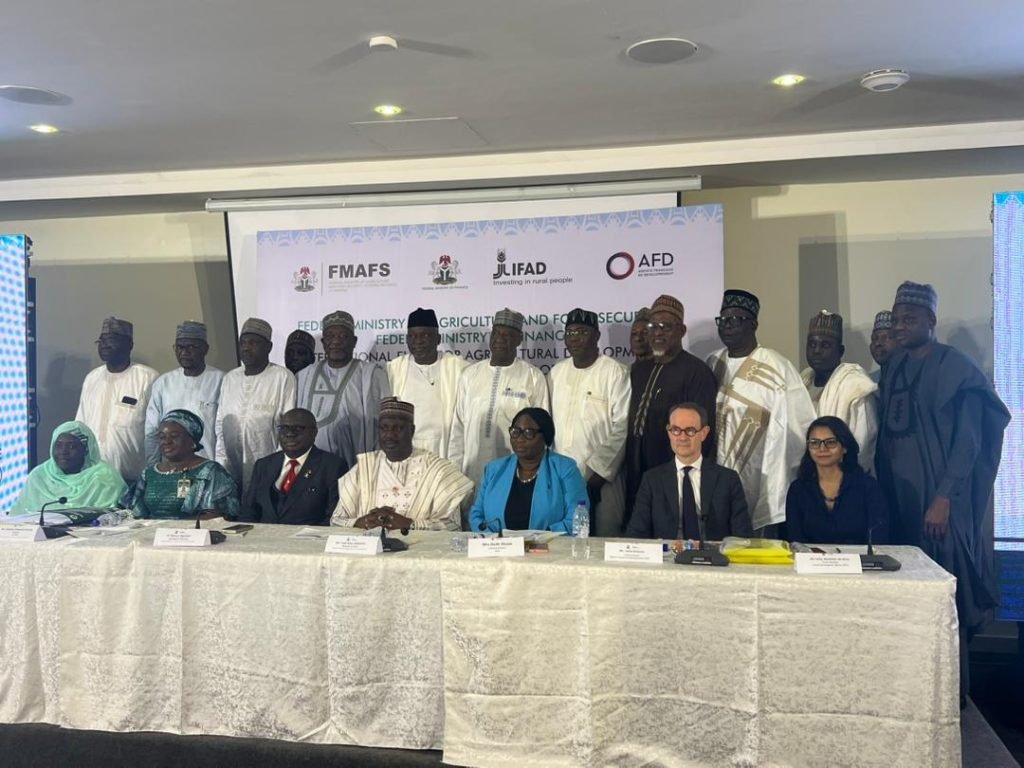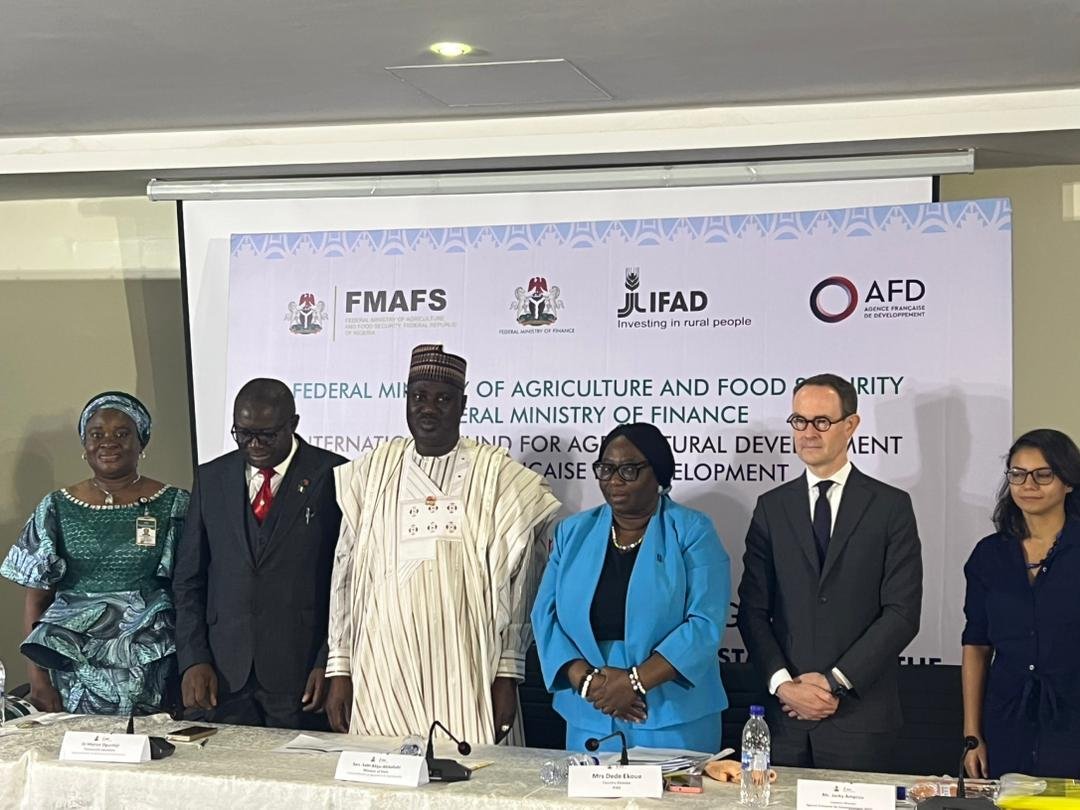

The Minister of State, Federal Ministry of Agriculture and Food Security, Sen (Dr) Aliyu Sabi Abdullahi has said the Value Chain Programme in Northern Nigeria (VCN) is determined to move beyond primary production to building efficient, competitive, and resilient value chains, where farmers are linked to markets, value is added locally, post-harvest losses minimized,and rural economies are energized.
Speaking during the FGN/IFAD/AFD Value Chain Programme in Northern Nigeria (VCN) High-Level Stakeholder Engagement Workshop, the Minister explained that VCN is not just another intervention, but a clear demonstration of the strong political will of the government to decisively address poverty, unemployment, food insecurity, and vulnerability across Northern Nigeria by building strong, inclusive, climate-resilient, and nutrition-sensitive agricultural value chains.
According to him, VCN recognizes that Northern Nigeria holds enormous agricultural potential, and the programme will help provide coordination, investment, infrastructure,and institutional strengthening, among others, with emphasis on technical assistance to shift from potential to practical outcomes that improve livelihoods.
In his words, “The selection of priority value chains across the participating states is a deliberate strategy, each state will focus on commodities where it has comparative and competitive advantage, ensuring that interventions are not generic, but targeted, impactful, and economically viable.
“ The success of this programme will depend on strong collaboration between the Federal Government, State Governments and Development Partners. It will require commitment to timelines, adherence to agreed processes, and a shared sense of responsibility.”
Abdullahi urged the state governments to take full ownership, adding that the real impact will be felt in communities among farmers, youths and rural enterprises.
The minister also appreciated the development partners for continued support and collaboration.
On his part, the Permanent Secretary of the Federal Ministry of Agriculture and Food Security, Dr Marcus Ogunbiyi, said the VCN marks the formal commencement of an eight-year effort to strengthen agricultural systems, boost rural livelihoods and drive inclusive, climate-resilient growth across nine states.
He explained that the $158m VCN, jointly financed by the Federal Government, the International Fund for Agricultural Development and the Agence Française De Dévelopment, became effective on March 12, 2026, and is designed to consolidate previous agricultural interventions while introducing stronger systems for inclusive, climate-resilient and nutrition-sensitive growth.
The PS said implementation would be state-specific, leveraging the comparative advantages of Bauchi, Borno, Jigawa, Kano, Katsina, Kebbi, Sokoto, Yobe and Zamfara, with targeted support for priority commodities across both staple and cash crop value chains.
Ogunbiyi stressed that state-level ownership remains critical to the success of the programme, noting that the commitment of Commissioners of Agriculture and Finance will determine the pace and effectiveness of execution.
Also speaking, the International Fund for Agricultural Development (IFAD) Country Director for Nigeria, Ms. Dede Ekoue, announced that all approvals have been completed and financing secured for the take-off of VCN, by marking a transition from years of planning to full implementation.
Ekoue further explained that the high-level engagement marks the opening of the VCN Joint Roadmap for Start-Up and First Disbursement, where federal and state government representatives, alongside development partners, gathered to align on the final steps required to launch the programme.
The VCN initiative, which has undergone more than two years of consultations, design, and negotiations since October 2023, is aimed at strengthening agricultural value chains, improving productivity, and expanding economic opportunities for farmers, youth, and women agripreneurs across Northern Nigeria.
She noted that with all institutional approvals in place and funding commitments secured, the focus has now shifted to meeting key conditions necessary for disbursement and implementation.
According to her, the programme enjoys strong backing from top levels of government, including the Presidency, relevant ministries, and state governments.
Ekoue urged stakeholders to move beyond routine administrative processes and adopt more innovative, yet compliant, approaches to accelerate delivery.
She stressed that overcoming bottlenecks would require coordinated efforts and a shared commitment across federal and state institutions.
Describing the programme as a system in which every component must function effectively, she emphasized that collaboration among ministries, state governments, and financial authorities would be critical to its success.
She added that IFAD’s ability to disburse funds would depend on the timely fulfillment of agreed prerequisites by implementing partners.
Central to the next phase is a Joint Roadmap outlining five key conditions to be completed within 180 days. These include the finalization and gazetting of the Subsidiary Loan Agreement, the provision of state counterpart funding, the establishment of functional state offices, the recruitment of qualified programme teams through competitive processes, and the development of an Annual Workplan and Budget.
She called on state governments, particularly commissioners of finance, to prioritize the release of counterpart funds, noting that early financial commitment would demonstrate ownership and accelerate programme impact. She also highlighted the importance of providing operational offices to support coordination at the state level.
Ekoue stated that the programme had reached a decisive moment, with the groundwork already laid and expectations high among intended beneficiaries. She urged all stakeholders to act swiftly and collectively to ensure that the programme delivers tangible results.
In his remarks, the Nigeria Country Director of the Agence Française De Dévelopement, Jacky Amprou, described the programme as a timely and strategic intervention in response to persistent rural poverty, food and nutrition insecurity, climate pressures, population growth and conflict affecting Northern Nigeria.
He said the VCN aims to strengthen food systems, increase rural incomes and build long-term resilience over the next eight years, with a strong focus on women, youth, persons with disabilities and displaced populations.
Amprou added that the programme would drive climate-resilient and nutrition-sensitive agriculture, promote innovation and digital solutions, strengthen market systems, improve access to inputs and finance, and reduce post-harvest losses.
He emphasised that sustained impact will depend on policy alignment, institutional coordination and consistent stakeholder commitment, while reaffirming AFD’s support through financing and technical expertise in value chain development and private sector engagement.
He also acknowledged collaboration with the International Fund for Agricultural Development, describing the VCN as a flagship initiative under the partnership aimed at transforming rural economies and expanding economic opportunities across Northern Nigeria.
The workshop brought together the minister of state for agriculture and food security, commissioners and development partners to align implementation priorities and secure the commitments required to move the programme from planning to execution.