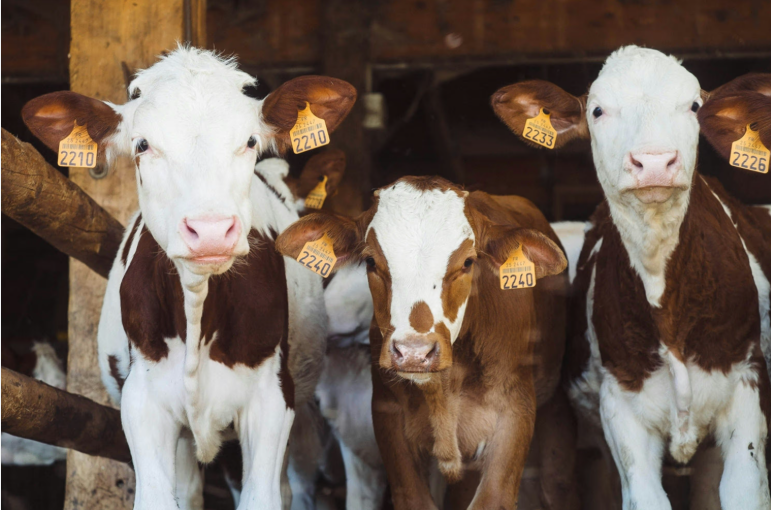

Ten dairy cows in Paraná, Brazil just made global headlines as loan collateral registered on B3, the country’s main stock exchange. The story spread fast as a milestone for tokenized cows entering mainstream finance. But there’s a catch that most coverage glossed over: there is no crypto token involved at all.
The R$100,000 (roughly $20,000) transaction is built on a decades-old Brazilian credit instrument, not a blockchain. A farmer at Fazenda Engenho Velho in Imbituva signed a Cédula de Produto Rural Financeira (CPR-F), a rural credit note that’s been part of Brazilian agribusiness for years. According to Yahoo Finance, BMP Sociedade de Crédito Direto originated the loan, while Target FIDC, a receivables investment fund, later acquired the credit rights and registered the deal on B3’s standard infrastructure.
So where does “tokenization” fit in? Each of the ten Holstein cows, together valued at R$120,000, wears a smart collar built by agritech company Cowmed. The collars track health, location, and behavior data, creating what the company calls an encrypted digital identity for every animal. Cowmed executive Thiago Martins explained that this digitization is what makes the cow eligible for formal registration at B3 as a movable asset. Still, none of it touches a public blockchain, a tradable token, or a crypto wallet.
What the collars actually solve is a much older problem in agricultural lending: proving that collateral is alive and hasn’t already been pledged elsewhere. Continuous monitoring replaces manual farm inspections and prevents a farmer from using the same cow as collateral twice. If an animal dies, it can even be swapped for a live one without unwinding the loan.
The ambition behind this “tokenized cows” experiment is large. Cowmed currently monitors around 100,000 dairy cows across more than 1,000 farms, representing a herd worth over R$2 billion. If just 20% of that network adopts the model, the partners project up to R$400 million (about $77.6 million) in herd-backed credit.
Brazil isn’t even the first to try something like this. Mongolia ran a simple web-based registry that logged 670,000 movable-property pledge notices by mid-2023, with livestock accounting for roughly a quarter of them — no blockchain required.
The real innovation here isn’t a token; it’s verified livestock data that lowers risk for lenders. Whether the promised R$5 million in follow-on deals materializes by year-end will tell us if branding this as “tokenized cows” was more than clever marketing.
Read the original reporting: Brazil Tokenized 10 Cows on B3: Is It Really a Crypto Token?