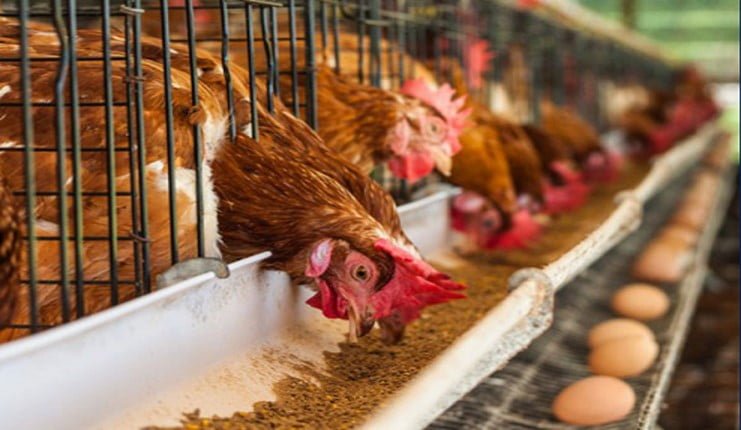

Nigerian poultry farmers have identified antibiotic use in egg production as a major barrier to the local egg powder market, saying concerns over drug residues are pushing major food companies towards imported products.
The Chairman of the Poultry Association of Nigeria, Lagos State Chapter, Mojeed Iyiola, said Nigeria must adopt specialised production systems for eggs destined for processing if local producers are to compete with imported egg powder.
Speaking in an interview with newsmen, Iyiola said some Nigerian poultry farmers rely heavily on antibiotics to treat birds, unlike producers in Europe who make greater use of probiotics.
He said major food companies, including Cadbury, were reluctant to use locally produced egg powder because of concerns over antibiotic residues.
“The reason is that in Nigeria, we use some of the major antibiotics to treat some of our birds, but in Europe, they don’t use antibiotics. They have probiotics they are using,” he said.
Iyiola said farmers supplying the egg powder industry would need to keep dedicated flocks whose eggs are produced without antibiotic treatment, adding that the government should support farmers in adopting the required production practices.
His call comes as poultry farmers continue to grapple with weak egg demand, resulting in significant losses and the disposal of thousands of crates of eggs weekly.
Iyiola also urged the Lagos State Government to fast-track the commencement of operations at the proposed egg powder factory in Igbodo, Epe, saying the facility could provide an alternative market for surplus eggs and reduce wastage.
“The best will not be materialised until the factory starts operation. So instead of losing eggs like this, we convert it to egg powder, and that is more storable,” he said.
According to him, converting fresh eggs into powder would significantly extend their shelf life while opening up new markets for poultry farmers.
He said the current weak demand was forcing farmers to slash egg prices because the product was highly perishable, while thousands of crates were reportedly being discarded every week.
“Farmers are suffering seriously because thousands of crates of eggs are being buried every week, due to low sales,” Iyiola said.
He added that farmers were caught in a difficult position as feed costs remained high despite falling egg prices. According to him, poultry farmers cannot reduce feeding when demand drops because doing so would affect egg production and deepen their losses.
Meanwhile, the President of the Nigeria Agribusiness Group, Kabir Ibrahim, attributed the worsening food crisis to declining consumer purchasing power and high agricultural input costs.
Ibrahim said weak demand should ordinarily lead to lower food prices, but rising production costs were keeping inflation elevated.
He also said the Federal Government’s zero-tariff importation policy on selected food items between July and December 2024 contributed to farmer apathy, particularly as the cost of agricultural inputs continued to rise.
Ibrahim urged the government to place greater priority on agriculture, agribusiness and security as part of efforts to strengthen domestic food production and address Nigeria’s food supply challenges.