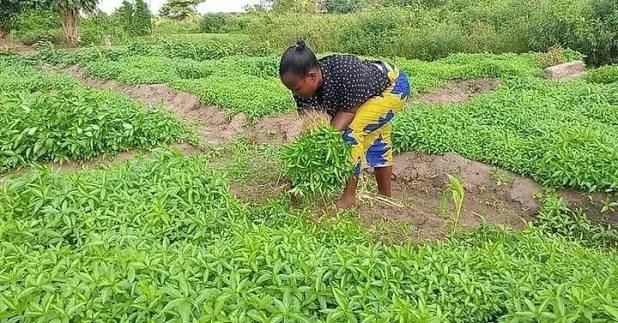

As Nigeria pushes to strengthen food security and grow commercial vegetable production, ewedu farming is emerging as one of the country’s most lucrative agribusiness opportunities, drawing fresh interest from smallholder and commercial growers alike.
Long a household staple, particularly in the South-West, ewedu (Corchorus olitorius) is now proving its worth beyond the kitchen. High demand, fast maturity, and low production costs are turning the leafy vegetable into a serious income earner for farmers willing to invest in good agronomic practice.
One major draw of ewedu farming is its short production cycle. With proper care, farmers can begin harvesting within three to five weeks of planting, and repeated harvests are possible over several weeks or months. That fast turnaround gives growers steady cash flow rather than the long wait typical of many other crops, making ewedu farming especially attractive to small-scale farmers and young entrepreneurs entering agribusiness for the first time.
Demand keeps climbing nationwide, with ewedu remaining a staple at homes, restaurants, bukas, and food vendor stalls across the country. The opportunity doesn’t stop at Nigeria’s borders either: Nigerian communities abroad, particularly in Europe and North America, are fuelling growing demand for fresh, frozen, and dried ewedu, opening new export channels and cutting down on local marketing risk for farmers.
Year-round production potential adds to the crop’s appeal. While ewedu thrives naturally during the rainy season, dry-season cultivation under irrigation or Fadama farming often fetches premium prices due to reduced supply, a fact agricultural experts say makes off-season ewedu farming especially profitable. Dry-season ewedu farming, in particular, has been singled out by agronomists as one of the more lucrative windows in the calendar.
Capital requirements remain modest compared to many other commercial crops. Farmers can start on small plots with quality seeds, organic manure or appropriate fertiliser, and consistent watering, a low entry barrier that makes ewedu farming a realistic option for women, youth, and first-time agripreneurs chasing quick returns.
Research backs up the enthusiasm. Studies continue to show positive returns for farmers who apply improved agronomic techniques, including correct plant spacing, organic manure application, and effective nutrient management, alongside recommendations for better production methods to boost yields and profit margins.
Beyond the money, ewedu carries strong nutritional value, packed with dietary fibre and vitamins A, C, and E, plus calcium and iron. As more Nigerians lean toward healthier diets, demand for nutrient-dense indigenous vegetables like ewedu is only expected to grow.
Profitability, however, hinges on good practice. Farmers are advised to use improved seeds where available, prepare fertile, well-drained soil, apply suitable fertilisers, manage weeds early, and watch for pests and diseases such as leaf spot, root-knot nematodes, and wilting. Careful harvesting and post-harvest handling remain essential to preserving quality and cutting losses.
Value addition presents another growth path. Rather than selling only fresh leaves, entrepreneurs can process ewedu into dried flakes or powdered products with longer shelf life, ideal for supermarkets, processors, and export buyers, while reducing post-harvest waste.
With strong domestic consumption, expanding export demand, and fast returns on investment, industry watchers believe ewedu farming will remain one of Nigeria’s standout vegetable agribusinesses well into 2026 and beyond.