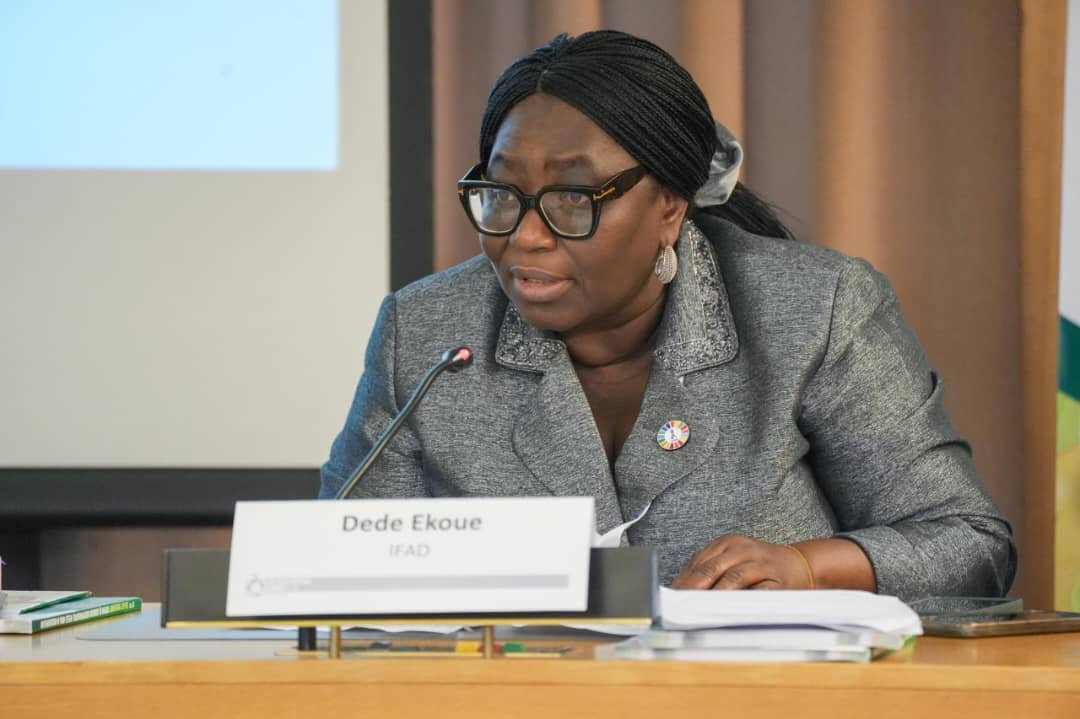

The International Fund for Agricultural Development (IFAD) has thrown its weight behind Nigeria’s newly launched National Agricultural Mechanization Investment Strategy, calling it a critical piece of the country’s push to raise farm output, strengthen food security and improve rural livelihoods.
The endorsement came at a High-Level National Policy Dialogue on Agricultural Mechanization held in Abuja, where IFAD’s Country Director for Nigeria, Dede Ekoue, praised the Federal Ministry of Agriculture and Food Security for bringing together stakeholders to tackle long-standing obstacles in the sector.
Ekoue’s remarks, delivered on her behalf by IFAD Country Programme Officer Chioma Adiele-Okpara, underscored a stark imbalance in African agriculture. Sub-Saharan Africa holds close to a quarter of the world’s arable land, yet contributes only about a tenth of global agricultural output. Closing that gap, she argued, will depend heavily on sustainable mechanization, not only to boost yields but to ease the physical burden on farmers, upgrade post-harvest handling, and draw more women and young people into agricultural value chains.
She noted that the new strategy fits squarely within existing national and regional policy frameworks, including Nigeria’s National Agricultural Technology and Innovation Policy (NATIP 2022–2027), the federal government’s Renewed Hope Agenda, and the African Union’s CAADP Kampala action plan, all of which emphasize value chain development, rural infrastructure, digital agriculture, financial inclusion and support for vulnerable groups.
IFAD pointed to its existing footprint in Nigeria as evidence of its commitment, citing three flagship initiatives: the Value Chain Development Programme (VCDP), the Livelihood Improvement Family Enterprises Project for the Niger Delta (LIFE-ND), and the Special Agro-Industrial Processing Zones (SAPZ) program. Through these efforts, the organization said it has worked to build market-oriented smallholder cooperatives, expand public-private-producer partnerships, and strengthen processing and aggregation infrastructure across the country.
Looking ahead, IFAD urged stakeholders to prioritize a set of execution measures to ensure the mechanization strategy delivers results. These include designing machinery access schemes around the financial and operational realities faced by smallholder farmers, women and youth; encouraging domestic manufacturing, local maintenance hubs and sustainable machinery service models; embedding climate-smart technologies into mechanization efforts to safeguard natural resources; and mobilizing private capital alongside public funding to keep the strategy financially viable over the long term.
Ekoue closed by reaffirming IFAD’s readiness to keep working with state and federal authorities, development partners and private sector players as Nigeria works toward a more inclusive, modernized and food-secure agricultural system.